

If you need to keep a refrigerator running during a power outage, look for a quiet battery power station with enough AC output for the fridge’s startup surge and enough battery capacity for the runtime you need. Battery power stations can be used indoors without gasoline exhaust. A fuel-powered generator, by contrast, must stay outdoors—never run one inside a home, garage, or other enclosed space.
Our picks include several battery stations and one fuel-powered option for comparison. Check your refrigerator’s running and starting wattage before choosing: a station’s capacity alone cannot tell you how long it will power your appliance.
Quick Comparison
| Product | AC Output | Battery Capacity | Best For | Indoor Use |
|---|---|---|---|---|
| CYBPULTE Portable Power Station | 600W continuous, 1,200W surge | 299Wh | Lightweight backup for small loads | Battery-powered |
| PECRON F1000 LFP Portable Power Station | 1,500W | 962Wh | Higher-output refrigerator backup | Battery-powered |
| EBL Portable Power Station | 500W | 519.48Wh | Small appliances and compact fridges | Battery-powered |
| WEN DF450i Dual-Fuel Inverter Generator | 3,500W rated on gas; 3,150W on propane | Fuel-powered | Outdoor backup for longer outages | No—outdoor use only |
| Dabbsson 600L Solar Generator | 600W, up to 900W boost | 768Wh | Compact battery backup with fast recharging | Battery-powered |
Our Picks: Best indoor generators for refrigerator reviews
PECRON F1000 LFP: Best Higher-Output Indoor Pick

The PECRON F1000 LFP is a battery power station with a 962Wh capacity and 1,500W pure sine wave AC output. That output gives it more headroom than the smaller stations here for refrigerators with higher running demands or a more challenging startup surge. Still, check your appliance’s requirements first; the 1,500W figure does not guarantee compatibility with every refrigerator.
Its four AC outlets let you connect more than one device, while USB and DC ports handle smaller electronics. The unit weighs 23.9 pounds and measures 15 by 8.5 by 8.4 inches, so it is portable but not as easy to carry as a compact station. The manufacturer also lists app control, quiet operation, and a 20ms UPS function for compatible connected equipment.
For outage preparation, the fast AC recharge and solar input option are useful ways to replenish the battery between uses. Solar panels and the optional car charger are separate purchases. As with any battery unit, runtime depends on the refrigerator’s power draw and how often its compressor runs.
Pros:
- Highest AC output among the battery stations in this roundup
- 962Wh capacity for more stored energy than the smaller options
- Four AC outlets and multiple USB and DC connections
- Fast AC charging and solar input support
Cons:
- Heavier than the compact battery stations here
- Solar panels and the optional car charger are sold separately
Verdict: Choose the PECRON if your refrigerator’s wattage fits its output limits and you want the strongest indoor-capable battery option in this group.
Dabbsson 600L: Best Balance of Capacity and Portability

The Dabbsson 600L is a 768Wh battery station rated for 600W AC output, with a boost feature that can reach 900W under specific conditions. Its semi-solid LiFePO4 battery and built-in battery management protections are aimed at repeated use, while the compact 17.6-pound design is easier to move than the PECRON.
It has two AC outlets, USB-C ports, USB-A ports, a car port, and a DC port. The built-in app control and sub-15ms EPS switching may appeal if you also want backup for electronics that need a fast changeover. That switching feature should not be treated as a guarantee for every appliance; check the refrigerator’s requirements and the station’s instructions.
The 600W output is the key limit to consider. It may suit a compact fridge or a refrigerator with a manageable startup demand, but the boost rating is not the same as continuous output. The included 210W solar panel can help with recharging when conditions allow, and the station can also recharge from AC or a car outlet.
Pros:
- 768Wh capacity in a relatively portable 17.6-pound unit
- Pure sine wave AC output for compatible appliances
- AC, solar, and car charging options
- App control and EPS switching feature
Cons:
- 600W continuous output may be too low for some refrigerators
- The 900W boost is conditional, not a continuous rating
Verdict: The Dabbsson is a sensible middle ground if your fridge stays within its continuous and startup limits and portability matters.
EBL Portable Power Station: Best for Compact Refrigerators
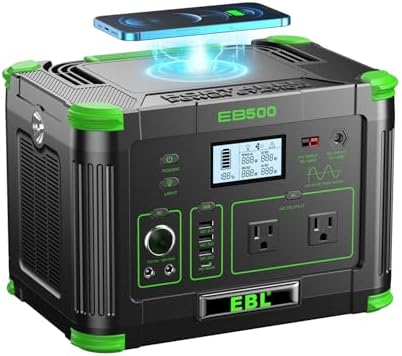
The EBL station stores 519.48Wh and supplies up to 500W through its pure sine wave AC outlets. Its 14.1-pound weight and range of outputs make it handy for small appliances, phones, and other essentials. The manufacturer identifies mini-fridges as a possible use, but that does not mean it can run every compact refrigerator; verify both running watts and startup needs.
Along with two AC outlets, it has USB-A and USB-C ports, DC ports, a 12V car outlet, and a wireless charging pad. You can recharge it from a wall outlet, a car, or a compatible solar panel. The solar panel is sold separately, and the listed recharge times vary by method.
The main tradeoff is its 500W ceiling and moderate battery capacity. A refrigerator that draws more power, has a high compressor startup surge, or needs to run for a long stretch may call for a larger station. The manual also advises turning off AC output when it is not in use and recharging the unit at least every three months.
Pros:
- 519.48Wh capacity in a portable 14.1-pound design
- Pure sine wave AC output
- Several recharging methods, including solar
- Multiple ports for small devices and accessories
Cons:
- 500W output rules out some refrigerators
- Solar panel is sold separately
Verdict: Consider the EBL for a mini-fridge or other compact refrigerator only after confirming that its startup and running demands stay within the station’s limits.
CYBPULTE Portable Power Station: Best Lightweight Option for Small Loads

At 6.8 pounds, the CYBPULTE is the easiest battery station here to carry. It offers 299Wh of stored energy, 600W continuous AC output, and a 1,200W surge rating. That surge figure may help with brief startup demands, but its small capacity limits how much energy it can store for an extended outage.
The station has two AC outlets, USB-C charging up to 140W, USB-A ports, a car outlet, and a DC port. Its pure sine wave inverter is intended for sensitive electronics, and an LCD shows battery level, output, and estimated runtime. The built-in light has steady, strobe, and SOS modes.
Its small size makes it appealing for phones, lights, and other low-energy essentials. For refrigerator use, the brief surge rating is only one part of the equation: the fridge’s running wattage must remain within the 600W limit, and 299Wh may be used up quickly depending on the load and compressor cycles. Solar charging is supported with a compatible panel sold separately.
Pros:
- Lightweight 6.8-pound design
- 600W continuous output with a 1,200W surge rating
- 140W USB-C port and several other output options
- LCD and built-in emergency light
Cons:
- 299Wh capacity is the smallest in this roundup
- Not a strong choice for extended refrigerator backup
Verdict: Pick the CYBPULTE for portability and small essential loads, not as your first choice for keeping a full-size refrigerator running through a long outage.
WEN DF450i: High Output, but Not for Indoor Operation

The WEN DF450i is a dual-fuel inverter generator, not an indoor power station. It runs on gasoline or propane and produces 3,500 rated watts on gasoline or 3,150 rated watts on propane, with 4,500 surge watts on either fuel. That output can be useful for outdoor backup, but the engine produces carbon monoxide. Never operate it indoors, in a garage, or in another enclosed or partly enclosed area.
WEN lists quiet operation at 58 dBA at quarter load from 22 feet, along with clean power for sensitive electronics. It has two 120V outlets, an RV-ready outlet, a 12V DC outlet, a USB port, a digital load and fuel display, wheels, and a carrying handle. It also includes fuel shut-off and automatic fuel selection that switches from propane to gasoline.
This model may fit a household that needs a higher-output generator for outdoor use and can follow safe placement and connection practices. It is not a substitute for an indoor battery station, and its fuel requirement means it needs proper outdoor operation and handling. Use the manual’s directions and appropriate equipment when powering appliances inside the home from an outdoor generator.
Pros:
- High rated and surge output for outdoor backup needs
- Runs on gasoline or propane
- Inverter output designed for sensitive electronics
- Wheels, handle, and fuel shut-off add practical convenience
Cons:
- Must never be operated indoors because of carbon monoxide risk
- Requires fuel and outdoor operation
Verdict: Choose the WEN only if you want a fuel-powered outdoor generator; for indoor operation, choose one of the battery power stations instead.
How to Choose an Indoor Generator for a Refrigerator
Check the Refrigerator’s Running and Startup Wattage
Find the refrigerator’s electrical requirements on its label or in its manual. The running wattage shows what it needs while operating, while the compressor may briefly draw more power when it starts. Your power station must handle both. Compare the startup demand with the station’s surge rating and the ongoing demand with its continuous AC output. If you cannot confirm the appliance’s startup needs, contact the manufacturer or an electrician before buying.
Match Battery Capacity to the Runtime You Need
Watt-hours measure stored energy, not a guaranteed number of hours for a particular appliance. Actual runtime depends on the refrigerator’s energy use, compressor cycles, inverter losses, and what else you plug in. A bigger battery generally offers more reserve, but even a high-capacity station may run down sooner than expected under a heavy load. Check the refrigerator’s energy use and plan to conserve power during an outage.
Choose a Battery Power Station for Indoor Use
Battery stations do not burn gasoline or propane, so they avoid engine exhaust and are the appropriate category for indoor backup. Follow the manufacturer’s instructions for placement, charging, and use. Fuel-powered generators, including the WEN in this roundup, must remain outdoors and away from doors, windows, and vents. Never run one inside a house, garage, or enclosed space.
Consider Recharge Options and Outage Length
For a short outage, recharging from a wall outlet before the storm may be enough. For longer interruptions, consider whether the station can recharge from solar panels or a car, and check whether the needed charging accessories are included or sold separately. Recharge time and solar output can vary with the charging method and conditions, so leave room in your plan for slower-than-expected replenishment.
Think About Outlets, Portability, and Other Loads
Count the AC outlets you need and consider whether the station will also run lights, phones, or a router. Every added device uses some of the battery’s stored energy. A lighter unit is easier to move, while larger-capacity models usually weigh more. Keep the station accessible during an outage and make sure cables can reach safely without creating a trip hazard.
Use UPS Features Carefully
Some stations include an EPS or UPS-style switching feature for connected equipment. These functions can help with certain devices, but switching times and compatibility vary. Do not assume a refrigerator will stay running without interruption simply because a station has a backup feature. Check the station’s instructions and the appliance’s requirements before relying on it.
Frequently Asked Questions
Can I run a refrigerator from a battery power station indoors?
Yes, a battery power station can be used indoors when operated according to its manufacturer’s instructions. Confirm that its continuous output and surge capability are suitable for your refrigerator, and keep track of the station’s remaining capacity.
Can I run a gas generator inside my home or garage?
No. A fuel-powered generator produces carbon monoxide and must never be operated inside a home, garage, or enclosed space. Keep it outdoors and follow its manual’s placement and safety directions.
Is a 600W power station enough for a refrigerator?
It depends on the refrigerator’s running wattage and compressor startup demand. A 600W continuous rating may work for some compact models but may not suit a full-size refrigerator or one with a high startup surge. Check the appliance’s requirements before choosing.
How long will a 962Wh power station run a refrigerator?
There is no single runtime that applies to every refrigerator. Energy use changes with the appliance, room conditions, compressor cycles, and other connected loads. Use the refrigerator’s energy information and the station’s instructions to estimate runtime, then allow for power-conversion losses.
Does a higher surge rating mean a power station will run a fridge longer?
No. Surge rating describes the brief extra power available for startup demands. Battery capacity, measured in watt-hours, is a better indicator of how much stored energy is available for runtime.
Can I recharge a power station with solar panels during an outage?
Some models support solar charging, but panel compatibility and charging speed vary. Check the station’s requirements and whether the panels are included. Solar conditions also affect how quickly the battery can recharge.
Final Recommendation
For the most headroom among these indoor-capable options, the PECRON F1000 LFP is the strongest place to start, provided your refrigerator’s running and startup wattage fit its limits. The Dabbsson 600L offers a more portable middle ground, while the EBL and CYBPULTE are better suited to compact appliances and smaller backup loads. Choose the WEN only for outdoor use, and never operate it inside a home or garage.