

The best RV generator is not always the one with the highest wattage. You’ll want enough running power for your appliances, an RV-ready outlet, and a fuel option that fits your travel style. The five picks below include quiet inverter models, dual-fuel choices, and a higher-output option for heavier electrical needs. Compare their rated watts and features with your RV’s requirements before choosing.
Quick Comparison: Best RV Generators
| Generator | Fuel | Rated Output | RV Outlet | Best For |
|---|---|---|---|---|
| Champion 4000-Watt Dual Fuel Inverter Generator | Gasoline or propane | 3,000 watts on gas; 2,700 watts on propane | 120V TT-30R | Quiet, flexible RV power |
| WEN 6800-Watt Dual Fuel Inverter Generator | Gasoline or propane | 5,100 watts on gas; 4,500 watts on propane | TT-30R | Higher output and varied outlets |
| WEN 4800-Watt RV-Ready Inverter Generator | Gasoline | 4,000 watts | TT-30R | Single-fuel inverter power |
| Westinghouse 4650 Peak Watt Dual Fuel Generator | Gasoline or propane | 3,600 watts on gas; 3,240 watts on propane | 30A TT-30R | Longer stated runtime per tank |
| Champion 4500-Watt Electric Start Inverter Generator | Gasoline or propane | 3,500 watts on gas; 3,150 watts on propane | RV-ready | Electric start and quiet operation |
Our Picks: Best rv generators reviews
Champion 4000-Watt Dual Fuel: A Quiet, Flexible RV Pick

This dual-fuel inverter generator offers 4,000 starting watts and 3,000 running watts on gasoline, or 2,700 running watts on propane. Its 120V TT-30R outlet is made for RV connections, while a household duplex outlet and 12V automotive-style outlet add options for other devices. Champion lists clean electricity with less than 3% total harmonic distortion, a useful feature for powering sensitive electronics.
The manufacturer states that it runs for up to 10 hours on gasoline and up to 25 hours on propane. Those figures are useful for comparison, but actual runtime depends on load and conditions. Its stated noise level is 64 dBA from 23 feet. CO Shield provides automatic shutdown if carbon monoxide is detected, but it does not replace safe outdoor placement.
This is a practical fit if you want the option to use propane and need moderate RV output. Its 3,000-watt gasoline rating is lower than the two WEN models here, so check whether it can handle your air conditioner and other appliances running together. The optional parallel kit can connect it with another compatible Champion inverter or power station for more output; the kit is sold separately.
Pros:
- Runs on gasoline or propane.
- Includes a 120V TT-30R RV outlet.
- Clean electricity is specified at less than 3% THD.
- Includes CO Shield and a three-year limited warranty.
Cons:
- Its running output is lower than the WEN 4800 and WEN 6800 models.
- The parallel kit is sold separately.
Verdict: Choose this Champion if you want a dual-fuel inverter with RV-ready connections and its 3,000-watt gasoline output meets your needs.
WEN 6800-Watt Dual Fuel: High Output with Extra Connections
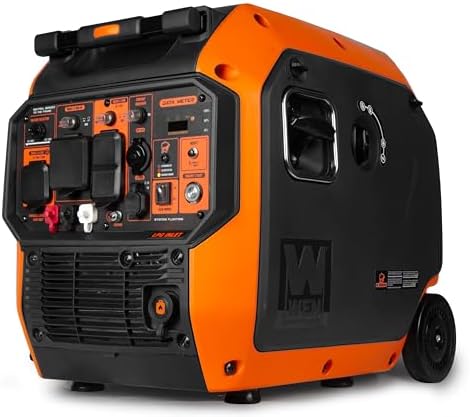
This is the highest-output option in the group. Its 224cc dual-fuel engine provides 6,800 surge watts and 5,100 rated watts on gasoline, or 6,000 surge watts and 4,500 rated watts on propane. It has an RV TT-30R outlet, two standard 120V outlets, USB ports, a 12V DC outlet, and an L14-30R 120V/240V receptacle.
The generator includes onboard wheels and a telescoping pull handle for moving it, plus a tool-free LPG quick connector and a six-foot regulator hose. A fuel shutoff uses remaining fuel in the carburetor before the engine stops, while the CO Watchdog sensor is designed to shut the unit down if it detects dangerous carbon monoxide levels.
Its extra capacity and outlet selection make it worth considering if your power plan includes several devices or you need more than a basic RV connection. The bonded-neutral 240V configuration is described as providing low-power Level 2 charging for battery and hybrid electric vehicles. Confirm compatibility with your vehicle and charging equipment before relying on that function. This model is larger in output than many RV campers need, so its added capability may be unnecessary if your loads are modest.
Pros:
- Highest rated output among these five picks.
- Supports gasoline and propane.
- Includes a TT-30R outlet, 120V/240V receptacle, USB ports, and DC outlet.
- Has wheels, a telescoping handle, CO shutdown, and fuel shutoff.
Cons:
- Its higher output may be more than some RV setups require.
- Check vehicle and charger compatibility before using its 240V charging feature.
Verdict: Pick the WEN 6800 if you need dual-fuel flexibility and more rated power than the other models in this comparison.
WEN 4800-Watt Inverter: A Strong Gas-Only Middle Ground

The WEN 56477i is a gasoline-powered inverter generator with a 224cc engine. It produces up to 4,800 surge watts and 4,000 rated watts, placing it between the Champion 4000 and WEN 6800 in rated gasoline output. Its TT-30R outlet connects to an RV, and four three-prong 120V outlets give you additional ways to power equipment.
WEN specifies clean power for sensitive electronics such as phones, tablets, and laptops. The model also has a Watchdog CO shutdown sensor and fuel shutoff, which uses remaining fuel in the carburetor before shutdown. Wheels and a telescoping pull handle are included to help move the unit. We couldn’t confirm a runtime or noise figure while researching this model, so compare those points directly with your expected use before buying.
This model suits RV owners who want inverter-style power and more rated output than the smaller Champion, but do not need a dual-fuel setup. Its 4,000-watt rating is lower than the WEN 6800’s gasoline rating, though higher than the other listed options. If propane operation is important to you, consider one of the dual-fuel models instead.
Pros:
- Provides 4,000 rated watts on gasoline.
- Includes a TT-30R RV outlet and four 120V outlets.
- Designed to provide clean power for sensitive electronics.
- Has CO shutdown, fuel shutoff, wheels, and a telescoping handle.
Cons:
- Runs on gasoline only.
- We couldn’t confirm the runtime or noise level while researching this model.
Verdict: Choose the WEN 4800 if you want a gasoline inverter with 4,000 rated watts and do not need propane capability.
Westinghouse 4650: Dual-Fuel Power with a Four-Gallon Tank
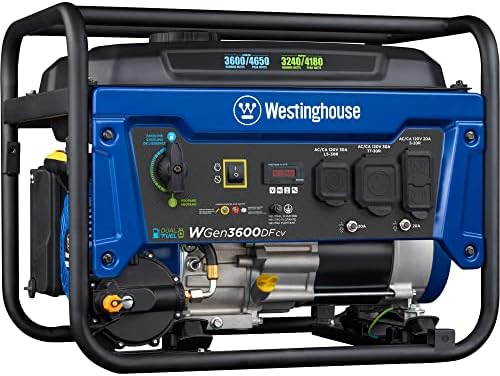
This Westinghouse portable generator runs on gasoline or propane and provides 3,600 rated watts on gas or 3,240 rated watts on propane. It has a 30A TT-30R outlet for RV use, plus a household duplex receptacle and an L5-30R outlet. Its four-gallon fuel tank is listed for up to 14 hours of runtime per tank; actual runtime will vary with the load.
The product description lists a 212cc four-stroke OHV engine, automatic low-oil shutdown, and a carbon monoxide shutdown feature. It also notes that the generator is functionally tested at the factory, so some residual oil or fuel odor may be present when it arrives. Unlike the inverter models in this group, this product is not described as an inverter, and no THD figure is provided. If clean power for sensitive electronics is a priority, compare the electrical requirements of your equipment before choosing it.
If it is, it may suit campers who value dual-fuel operation, multiple covered outlets, and a stated gasoline runtime per tank. Its rated output is below the WEN 4800 and WEN 6800.
Pros:
- Runs on gasoline or propane.
- Includes a 30A TT-30R RV outlet and two other outlet types.
- Has a four-gallon tank with up to 14 hours of stated runtime per tank.
- Includes low-oil and carbon monoxide shutdown features.
Cons:
- No inverter design or THD figure is specified.
Champion 4500-Watt Electric Start: Quiet Dual-Fuel Convenience

This Champion inverter offers 4,500 starting watts and 3,500 running watts on gasoline, or 3,150 running watts on propane. The manufacturer lists a noise level of 61 dBA and runtime of up to 14 hours on gasoline or 21 hours on propane. It is designed for RV use and includes an electric-start feature, an Intelligauge with a power meter, and an EZ Start Dial.
CO Shield provides carbon monoxide auto shutoff. The generator is also parallel ready, so an optional kit can connect it to another Champion inverter to increase output. That kit is sold separately, and you should verify compatibility with the other unit before planning a paired setup.
Compared with the Champion 4000, this model provides more rated power and a lower stated noise figure, but it is still less powerful than the WEN 6800. It may suit campers who want dual-fuel flexibility, electric start, and a stated runtime on both fuels. We couldn’t confirm the specific RV outlet type while researching this model, so confirm the connection matches your RV before purchasing.
Pros:
- Runs on gasoline or propane.
- Provides 3,500 rated watts on gasoline.
- Has electric start, an EZ Start Dial, and an Intelligauge.
- Includes CO Shield and supports optional parallel operation.
Cons:
- The parallel kit is sold separately.
- We couldn’t confirm the RV outlet type for this model.
Verdict: Choose this Champion if you want electric start, dual-fuel operation, and more gasoline output than the Champion 4000, after confirming the outlet matches your RV.
How to Choose an RV Generator
Match rated watts to your actual power needs
Rated watts tell you the power a generator can supply on an ongoing basis; starting or surge watts describe its short-term extra capacity when equipment starts. Make a list of the appliances you plan to run at the same time and check their power requirements, including startup needs. Do not choose based on peak watts alone. If your RV air conditioner or other high-draw equipment is essential, confirm that the generator can support it alongside the rest of your load.
Check the outlet and your RV connection
A 120V TT-30R outlet is common on RV-ready generators in this group, but not every product description gives the same connection details. Confirm your RV’s plug type and electrical requirements before buying. An adapter may address a plug mismatch, but it does not increase the generator’s available power or make an incompatible electrical setup safe.
Choose gasoline, propane, or dual fuel
Gasoline-only models can be a straightforward choice if that is the fuel you plan to carry. Dual-fuel generators let you switch between gasoline and propane, which can add flexibility, but their rated output may differ by fuel. Compare the gas and propane figures separately, and check the stated runtime for the fuel you expect to use.
Decide whether you need inverter power
Several picks here are described as inverter generators and list clean power or low THD, which may matter for sensitive electronics. The Westinghouse listing does not identify it as an inverter or provide a THD figure. If you plan to power computers, chargers, or other sensitive devices, check their requirements and the generator’s specifications rather than assuming all portable generators provide the same power quality.
Consider noise and placement
Only some products in this comparison include a stated noise figure, and manufacturers may measure sound under specific conditions. Use those figures as a reference, not a guarantee of what you will hear at your campsite. Whatever model you choose, operate it outdoors and away from doors, windows, and other openings. A carbon monoxide shutdown feature is an added safeguard, not permission to use a generator indoors or in an enclosed space.
Think about transport, runtime, and maintenance
Wheels and handles can make a generator easier to move, while a longer stated runtime can mean fewer refueling stops under the conditions used for that estimate. Real-world runtime changes with electrical load and other conditions. Look for practical maintenance features, such as fuel shutoff, and follow the manufacturer’s instructions for setup, oil, fuel, storage, and service.
Check parallel compatibility and extra features
Some inverter generators can connect to another compatible unit with a separate parallel kit. This can be useful when you need more power only for certain trips, but confirm that both generators and the kit are compatible. Features such as USB ports, electric start, a voltage selector, or a fuel gauge may add convenience; weigh them against the power and outlets you actually need.
Frequently Asked Questions
What size generator do I need for an RV?
It depends on the appliances you plan to run together and their startup power needs. Add up the running requirements, account for equipment that draws extra power when starting, and compare that total with the generator’s rated watts. Check your RV and appliance manuals before deciding.
Is a 30-amp RV-ready outlet included on every pick?
The TT-30R outlet is confirmed on the Champion 4000, both WEN models, and the Westinghouse. We couldn’t confirm the RV outlet type for the Champion 4500, so check that connection before buying.
Can I run an RV air conditioner with one of these generators?
Possibly, but it depends on the air conditioner’s running and startup requirements and what else is drawing power. Compare those needs with the generator’s rated and surge watts. A higher peak-watt figure by itself does not guarantee that a generator can support your full setup.
Is an inverter generator better for sensitive electronics?
An inverter model that specifies clean power or a low THD figure may be a better fit for sensitive electronics. The Champion 4000 lists less than 3% THD, and the WEN 4800 is described as producing clean power. Check the requirements of your devices and the generator specifications before use.
Can I use propane instead of gasoline?
The Champion 4000, WEN 6800, Westinghouse 4650, and Champion 4500 are listed as dual-fuel models. The WEN 4800 is listed as gasoline-powered. Compare each model’s output on your chosen fuel, since rated watts can be lower on propane.
Can I run a portable generator inside an RV or garage?
No. Operate a portable generator outdoors, away from doors, windows, and other openings, and follow its safety instructions. Carbon monoxide is dangerous, and an automatic shutdown sensor does not make indoor or enclosed use safe.
What is parallel operation?
Parallel operation connects two compatible generators using a parallel kit to increase available output. Kits may be sold separately, and compatibility depends on the specific generator models. Confirm the manufacturer’s requirements before connecting units.
Final Recommendation
For a quiet dual-fuel inverter with a specified TT-30R outlet, the Champion 4000 is a balanced place to start if 3,000 gasoline running watts is enough for your setup. Choose the WEN 6800 when you need the most rated output and a wider set of connections, or the Champion 4500 if electric start and its listed noise and runtime figures matter more. Before ordering any generator, verify your RV’s outlet, calculate your power needs, and follow safe outdoor-use instructions.