

Omega makes several kinds of slow masticating juicers, from compact models for everyday produce to versatile machines that can handle more than juice. The best choice for you depends on how much prep you want to do, what you plan to juice, and whether you value extra functions such as a wide hopper or food processing. Here’s how the five options compare.
Quick Comparison: Best Omega Juicers
| Product | Standout feature | Best for |
|---|---|---|
| Omega All-in-One Nutrition System | Multiple food-preparation functions | Shoppers who want more than a juicer |
| Omega Vertical Slow Masticating Juicer | 43 RPM squeezing and a no-drip tap | Everyday juice with less mess |
| Omega Hands-Free Juicer with Batch Hopper | Large hopper for loading a recipe at once | Convenient batch juicing |
| Omega Wide Mouth Compact Vertical Juicer | Three-inch feed opening and two speeds | Reducing produce prep time |
| Omega H3000R Slow Masticating Juicer | Compact, quiet-focused design | Simple daily juicing in a smaller kitchen |
Our Picks: Best omega juicers reviews
Omega All-in-One Nutrition System: Best for Versatility

This slow juicer runs at 80 RPM and uses a three-stage masticating process to press produce. Its adjustable end cap has three pressure settings, and an automatic pulp ejection system is designed to support continuous juicing. The extra-large feed tray and built-in handle add practical touches for moving and loading the machine.
Its main distinction is that it is presented as a broader nutrition system, not just a juice extractor. The listed functions include making nut butter, baby food, frozen desserts, pasta, soy milk, and ground coffee or spices. That range may appeal if you want one appliance to cover several kitchen tasks. Before buying, check the product listing to confirm which accessories are included for the tasks you plan to do.
The trade-off is that this model may be more machine than you need if juice is your only goal. Its many functions can also mean more parts and setup than a straightforward juicer. Compared with the vertical models below, it emphasizes versatility over a wide-mouth hopper or a particularly compact footprint.
Pros:
- Three pressure settings and automatic pulp ejection
- Designed for leafy greens, wheatgrass, fruits, and vegetables
- Offers food-preparation functions beyond juicing
- Extra-large feed tray and built-in handle
Cons:
- May be more involved than necessary for juice-only use
- Check the listing for the accessories needed for specific functions
Verdict: Choose this Omega if you want a slow juicer that can also support a range of food-preparation tasks.
Omega Vertical Slow Masticating Juicer: Best for Less-Mess Juicing

This compact vertical model operates at 43 RPM and uses Omega’s Slow Squeezing Technology. Its dual-edge auger is designed to extract juice from fruits, vegetables, and soybeans while leaving less pulp in the drink. A no-drip tap at the spout lets you close the flow while mixing juice or removing the cup.
The tap is a useful design detail if you like combining ingredients in the juicer or want to limit drips after pouring. The product also has an auto-cleaning system intended to help keep the screen clear during use. That does not mean you can skip cleaning the parts after juicing, but it may help with the screen while the machine is running.
One practical detail to know before buying: the juicer has an interlock that must be engaged for it to operate. This model’s narrower, vertical format is appealing if counter space matters, though it does not have the large batch hopper of the hands-free option. Its listed speed is also lower than the 80 RPM all-in-one model, but speed alone does not tell you which machine will suit your ingredients or routine better.
Pros:
- Compact vertical design
- No-drip tap helps control pouring and mixing
- Designed to extract juice from produce and soybeans
- Auto-cleaning system helps keep the screen clear during juicing
Cons:
- Interlock must be engaged before operation
- Does not have the large batch hopper featured on another pick
Verdict: This is a good fit if you want a compact vertical juicer with a helpful spout tap and don’t need a hands-free batch hopper.
Omega Hands-Free Juicer: Best for Loading a Full Recipe at Once

This cold-press model is built around a large-capacity batch hopper. Rather than feeding each piece of produce one at a time, you can load a recipe into the hopper and let the juicer process it. That hands-free approach may make juicing more convenient when you prepare several servings at once.
The product description highlights a low-speed auger and cold-press action, along with BPA-free parts that separate for cleaning. It also has a compact design intended to fit on the counter. Those features make it worth considering if your priority is a simpler loading routine without giving up a space-conscious footprint.
The key limitation in the supplied product information is availability: this model is marked unavailable, so it may not be an option to buy when you check. It also does not specify an RPM or feed-opening measurement. If those details matter to you, confirm them on the listing before deciding. Compared with the wide-mouth model below, this one emphasizes loading a batch rather than a stated three-inch opening.
Pros:
- Large hopper lets you load a recipe at once
- Hands-free approach can reduce feeding during juicing
- Separating BPA-free parts are designed to make cleaning easier
- Compact design intended for countertop use
Cons:
- Marked unavailable in the supplied product information
- RPM and feed-opening size are not specified in the supplied details
Verdict: Consider this model if batch loading is your top priority, but verify that it is available and check any specifications important to you before purchase.
Omega Wide Mouth Compact Vertical Juicer: Best for Faster Prep

This vertical cold-press juicer has a three-inch feed opening, which can reduce the amount of cutting needed for some fruits and vegetables. Its two-speed function is designed to suit different types of produce, while the three-stage auger and low-speed mechanism focus on juice extraction. The listed operating range is 45 to 65 RPM.
An anti-clog reverse function is another practical feature, especially when a batch of produce is difficult to move through the juicing chamber. The machine is also described as quiet in operation. Its compact vertical design may be a sensible compromise for shoppers who want a wider opening but still need to manage counter space.
A wide opening can save prep time, but it does not guarantee that every piece of produce will fit whole; larger items may still need cutting. The two-speed setting also means you may need to choose a setting based on what you are juicing. Compared with the 43 RPM vertical model, this one puts more emphasis on a wide opening and speed choices.
Pros:
- Three-inch opening can reduce produce prep
- Two speeds for different produce types
- Anti-clog reverse function
- Compact vertical design with a stated 45–65 RPM range
Cons:
- Some produce may still need cutting to fit the opening
- You may need to select the speed that suits the ingredients
Verdict: Pick this model if you want a compact Omega with a wide feed opening and the flexibility of two speeds.
Omega H3000R Slow Masticating Juicer: Best Compact Everyday Option
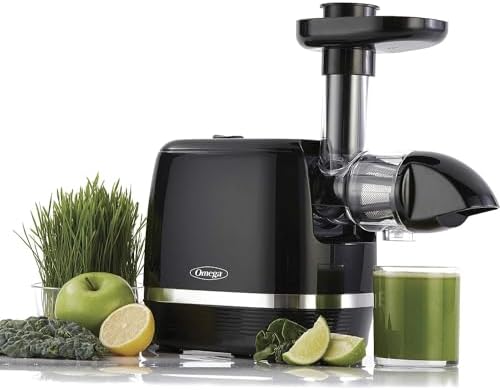
The H3000R is a 150-watt slow masticating juicer aimed at everyday use. Its compact design is intended to take up less counter space, and the product description emphasizes quieter operation compared with high-speed juicers and blenders. It is listed for juicing celery, carrots, leafy greens, wheatgrass, and other fruits and vegetables.
This model keeps the focus on juicing rather than offering the extra food-preparation functions of the all-in-one system. That simpler purpose may suit you if you want a dedicated appliance for regular juice and do not need pasta or nut-butter functions. The supplied product details do not give a feed-opening size or a specific cleaning feature, so check the listing if those details are deciding factors.
The H3000R may be a practical choice for a smaller kitchen, but its compact design does not automatically mean it will require less cleanup after every use. Compared with the wide-mouth model, it also lacks a stated larger opening and two-speed function in the supplied information. Its appeal is its straightforward, space-conscious design.
Pros:
- Compact design for kitchens with limited counter space
- Designed for a range of fruits, vegetables, and leafy greens
- Slow masticating operation
- Described as quieter than high-speed juicers and blenders
Cons:
- Does not list the extra food-preparation functions of the all-in-one model
- Feed-opening size and specific cleaning features are not stated in the supplied details
Verdict: Choose the H3000R if you want a compact, dedicated slow juicer and don’t need a wide hopper or extra kitchen functions.
How to Choose an Omega Juicer
Think about what you plan to juice
Consider whether you mostly make juice with soft fruit, firm vegetables, leafy greens, or a mix. Omega’s product descriptions list different produce types across the range, but individual features vary. If you regularly juice leafy greens or wheatgrass, look for a model whose supplied details specifically mention those ingredients.
Choose between batch loading and a wide opening
A large-capacity hopper can let you load a recipe at once, while a wide feed opening may reduce cutting for some produce. These features solve different problems: a hopper reduces the need to feed ingredients one by one, and a wide opening can make prep quicker. Think about which step takes more time in your routine.
Decide whether you want extra functions
The all-in-one system is the clear choice in this group if you want to make foods beyond juice, such as nut butter, baby food, pasta, or frozen desserts. If you only need a juicer, a more focused model may be simpler to choose. Confirm which attachments are included before relying on any extra function.
Compare size and countertop fit
Several of these models are described as compact or vertical, but the supplied details do not provide full measurements for each one. Check the product listing for dimensions and compare them with your available counter and storage space. Also consider room for the juice cup, pulp container, and any parts you need to access while juicing.
Look at cleanup and everyday handling
Cleaning is part of the routine, so check how the parts separate and what the manufacturer says about cleaning. The vertical 43 RPM model has an auto-cleaning system that helps keep its screen clear during use, while the batch-hopper model has separating BPA-free parts. Neither feature means that every part is self-cleaning; plan to clean the juicer after use.
Check controls and practical features
Features such as a no-drip tap, an anti-clog reverse function, adjustable pressure settings, and multiple speeds can make a difference depending on how you use your juicer. Focus on the controls that solve a real problem for you rather than choosing a model based on the longest feature list.
Frequently Asked Questions
What is the difference between a masticating juicer and a high-speed juicer?
A masticating juicer uses an auger to press produce at a low speed. The Omega models here are described as slow or cold-press juicers. A high-speed juicer uses a different extraction approach; the H3000R description notes that it is quieter than high-speed juicers and blenders.
Which Omega juicer is best for leafy greens?
The all-in-one system and H3000R descriptions specifically mention leafy greens. The all-in-one model also lists wheatgrass, while the H3000R is described for leafy greens and other produce. Consider your counter space and whether you want functions beyond juicing when comparing them.
Which model can help reduce produce prep?
The wide-mouth compact vertical model has a three-inch opening, which may reduce cutting for some ingredients. The hands-free model instead focuses on loading a full recipe into a large-capacity hopper. Check the product details and your usual ingredients to see which feature better matches your routine.
Does the Omega vertical 43 RPM juicer need to be assembled in a specific way?
The supplied information says its interlock must be engaged for the machine to operate. Follow the product instructions for setup and operation, and confirm the parts are correctly positioned before use.
Can an Omega juicer make foods other than juice?
The All-in-One Nutrition System is described for several additional tasks, including making nut butter, baby food, pasta, soy milk, and frozen desserts. Check the listing to confirm which accessories are included for the functions you want.
Is the hands-free Omega juicer available?
It is marked unavailable in the supplied product information. Availability can change, so check the listing before making a decision. If it is not available, the wide-mouth vertical model is another option to consider for easier loading.
What is the best Omega juicer for a small kitchen?
The vertical 43 RPM juicer and H3000R are both described as compact. The wide-mouth model is also described as compact, but its larger opening may be more useful if prep time is a bigger concern than keeping the design simple. Check dimensions before buying to make sure the machine fits your space.
Final Recommendation
For most shoppers who want a balance of convenience and practical features, the Omega Wide Mouth Compact Vertical Juicer is a strong place to start, thanks to its three-inch opening, two speeds, and anti-clog reverse function. Choose the All-in-One Nutrition System if you want more than juice, or the H3000R if a compact, dedicated juicer is your priority. If hands-free batch loading matters most, check whether the batch-hopper model is available before you settle on an alternative.