

A good mini drone with a camera should be easy to carry, steady enough for usable footage, and simple to control. The right choice depends on what you want to capture: cinematic aerial video, hands-free follow shots, or casual flights with beginner-friendly tricks. These five options range from compact camera drones with gimbal stabilization to a lighter palm-launch model and a basic 1080p starter drone.
Quick Comparison
| Mini drone | Camera and stabilization | Flight highlights | Best for |
|---|---|---|---|
| DJI Mini 4K Combo | 4K UHD, 3-axis gimbal | Two batteries; up to 62 minutes total flight time | Steady aerial video and longer outings |
| DJI Mini 3 with DJI RC | 4K HDR, 3-axis gimbal | 38-minute flight time listed; longer with optional battery | Vertical video and a screen-equipped controller |
| DJI Neo | 4K UHD, stabilization technology | 135 g; palm takeoff and subject tracking | Hands-free clips and grab-and-go flights |
| WEPETCO X29 | 1080p HD, adjustable camera angle | Two batteries; up to 25 minutes total | Beginner-friendly play and practice |
| DJI Mini 5 Pro Fly More Combo Plus | 1-inch CMOS, 4K/60fps HDR | Three batteries; up to 52 minutes per battery | Advanced creative controls and tracking |
Our Picks: Best mini drone with camera reviews
DJI Mini 4K Combo: Best balance of steady video and portability
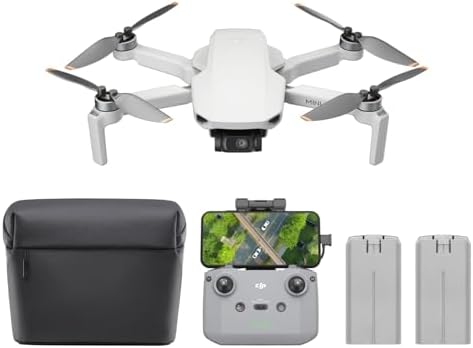
The DJI Mini 4K is a compact camera drone built around 4K UHD video and a 3-axis gimbal. The gimbal helps steady the camera as the drone moves, which is useful when you want smoother footage of scenery, trips, or outdoor activities. The listing describes the aircraft as weighing under 249 g and says it includes a remote controller and a shoulder bag.
This combo includes two batteries, with up to 62 minutes of total flight time listed. That is useful if you plan to spend a longer stretch capturing footage without stopping to recharge after one battery. QuickShots provide several automated camera moves, while one-tap takeoff and landing, hovering, and Return to Home features can make early flights less daunting.
There are a few details to plan around. The listed transmission range is a maximum figure, not a promise of uninterrupted range in every setting. DJI Fly is not available through Google Play according to the product details, so Android users should download it from DJI’s official website. Also, weight alone does not settle every flight-rule question; check the FAA’s current guidance and local rules before flying.
Pros:
- 4K UHD video with 3-axis gimbal stabilization
- Two included batteries for up to 62 minutes of combined flight time
- Beginner-friendly features such as one-tap takeoff and Return to Home
- QuickShots offer easy-to-start automated camera moves
Cons:
- Android users may need to install DJI Fly from DJI’s website
- The maximum transmission range depends on conditions and should not be treated as a guaranteed flight distance
Verdict: Choose the Mini 4K Combo if you want stabilized 4K footage, beginner aids, and two batteries in one package.
DJI Mini 3 with DJI RC: Best for vertical video and easy viewing

The DJI Mini 3 pairs a 4K HDR camera with a 3-axis mechanical gimbal. Its standout creative feature is true vertical shooting, which can make it easier to frame tall subjects or create footage for a phone screen without relying on a landscape crop. The camera also offers Panorama and QuickShots modes for different kinds of aerial clips.
This version comes with the DJI RC, which has a built-in 5.5-inch HD display and the DJI Fly app pre-installed. That means you can view the flight feed on the controller screen rather than depending on your phone for that display. The listing gives a 38-minute flight time and says an optional Intelligent Flight Battery Plus can extend that to up to 51 minutes; with that battery, the aircraft weighs more than 249 g.
Like the Mini 4K, the Mini 3 is described as having GPS Return to Home, precise hovering, and automatic takeoff and landing. Its combination of a screen-equipped controller and vertical filming makes it a more focused pick for creators who want quick framing and sharing options. Check applicable flight rules, especially if changing the battery affects the aircraft’s weight.
Pros:
- True vertical shooting for tall subjects and phone-oriented footage
- 4K HDR video with a 3-axis mechanical gimbal
- DJI RC includes a built-in 5.5-inch display
- QuickShots and Panorama add creative shooting options
Cons:
- The longer-flight Battery Plus is sold separately and increases the aircraft’s weight above 249 g
- Vertical filming and the screen-equipped controller may be unnecessary if you only want basic aerial video
Verdict: The Mini 3 is a strong fit if you value vertical video and want a controller with its own display.
DJI Neo: Best for palm takeoff and hands-free clips

At 135 g, the DJI Neo is the lightest option in this group. It is designed for quick, simple flights: the drone can take off and land from your palm, and the standard package includes propeller guards. It can also fly without a dedicated controller, using a smartphone app or voice control, while a remote controller is another option.
The Neo records 4K UHD video and includes subject tracking and eight QuickShots modes. Those features suit casual vlogging and short clips where you want the drone to follow you or create a preset camera move. Its light, compact design is convenient for carrying, but the product information lists Level 4 wind resistance, so it is not the strongest choice here for breezy conditions.
The standard package is described as including a battery and propeller guards, but the listing does not specify a flight time. If long flights or manual camera control are top priorities, compare it with the Mini 4K or Mini 3. DJI Neo also requires activation in DJI Fly, which Android users may need to download from DJI’s official website rather than Google Play.
Pros:
- Lightweight 135 g design with palm takeoff and landing
- 4K UHD video, subject tracking, and eight QuickShots modes
- Can be operated without a dedicated controller
- Propeller guards are included in the standard package
Cons:
- The product details do not provide a flight-time figure
- Level 4 wind resistance is lower than the Level 5 rating listed for the Mini 4K and Mini 3
Verdict: Pick the Neo if portability, palm launch, and hands-free follow footage matter more than a listed long flight time.
WEPETCO X29: Best for a simple starter drone with camera tricks

The WEPETCO X29 is a beginner-focused camera drone with 1080p recording and a camera angle that can be adjusted remotely by up to 90 degrees. You can connect a smartphone for a live camera preview. Its feature set also leans toward play: it includes 360-degree flips, circle and spiral flight, gesture selfies, voice control, and waypoint flight.
Two rechargeable batteries are included, with up to 25 minutes of total flight time listed. One-key takeoff and landing, headless mode, three speed settings, and an altitude hover feature are intended to help new pilots get started. The listing also mentions an emergency stop and low-power warning.
This is the only 1080p option in the comparison, so it is better suited to learning and casual clips than to shoppers who want 4K video or a 3-axis gimbal. Its many modes may be fun, but they do not replace careful practice in an open area. The product details do not give its weight or a wind-resistance rating, so check the listing and applicable flight rules before use.
Pros:
- Two batteries provide up to 25 minutes of total flight time
- Remote camera-angle adjustment and smartphone preview
- One-key controls and hover features are aimed at beginners
- Includes playful modes such as flips, gesture selfies, and waypoint flight
Cons:
- 1080p recording is a step down from the 4K options in this list
- The supplied details do not state the drone’s weight or wind resistance
Verdict: Consider the X29 for beginner practice and fun flight modes, but choose a DJI model if sharper 4K footage is your priority.
DJI Mini 5 Pro Fly More Combo Plus: Best for advanced camera control

The Mini 5 Pro is the most feature-focused camera drone here. Its listed 1-inch CMOS sensor records 4K/60fps HDR video, and its gimbal supports true vertical filming plus 225-degree roll rotation. The combo includes a DJI RC 2 controller, three batteries, spare propellers, a charging hub, and ND filters, so it is set up for longer creative sessions and a range of shooting conditions.
It also adds ActiveTrack 360-degree tracking and omnidirectional obstacle sensing, including forward-facing LiDAR and vision sensors. These features are aimed at creators who want the drone to follow a subject and help detect obstacles. They can support safer, more controlled flying, but they do not remove the need to pay attention to your surroundings.
The product information lists up to 52 minutes of flight per battery when using the Intelligent Flight Battery Plus. It also gives the aircraft weight as approximately 249.9 g, with a stated variation of plus or minus 4 g. That means you should not assume every unit or configuration stays under a particular weight threshold. Check the actual weight and the FAA and local requirements before flying, especially at night, where the listing notes that permits may be required in some places.
Pros:
- 1-inch CMOS sensor and 4K/60fps HDR video
- True vertical filming and a gimbal with 225-degree roll rotation
- Three batteries and a charging hub included in the combo
- ActiveTrack 360-degree and obstacle-sensing features
Cons:
- Listed weight is approximately 249.9 g with a stated variation, so verify the weight and rules for your setup
- Its advanced features may be more than a casual or first-time flyer needs
Verdict: Choose the Mini 5 Pro combo if you want advanced tracking, a larger listed sensor, and more control over your footage.
How to Choose a Mini Drone with a Camera
Match camera quality to your goal
Think about where your footage will be viewed. For casual clips, a 1080p camera may be enough; for more detail and flexibility, the 4K options are stronger candidates. HDR capture, vertical shooting, and gimbal stabilization also affect the look and format of your footage, so focus on the features you will actually use rather than the largest number of modes.
Look for the right kind of stabilization
A 3-axis gimbal physically steadies the camera as the drone moves, as listed for the Mini 4K and Mini 3. Other models describe stabilization technology without specifying the same gimbal design. If smooth aerial footage is a priority, compare the stabilization method as well as the camera resolution.
Consider battery count and stated flight time
Flight time can shape how much you can capture during an outing. Compare the included batteries and whether a listed figure is per battery or total. The Mini 4K combo lists up to 62 minutes across two batteries, while the Mini 5 Pro listing gives up to 52 minutes per battery with the Intelligent Flight Battery Plus. Actual use can vary, so treat listed times as maximum figures rather than guarantees.
Choose controls that fit your experience
One-tap takeoff and landing, hovering, and Return to Home can make a drone easier to approach as a beginner. The Neo offers palm launch and controller-free options, while the Mini 3 package includes a remote with its own display. A phone preview can be useful too, but check app setup before buying; DJI says its Fly app is not available on Google Play and directs users to its official website.
Check weight and flight rules
Do not rely on a product name or weight category alone to decide what rules apply. The Mini 5 Pro’s stated weight is approximately 249.9 g with a small stated variation, while the Mini 3’s optional Battery Plus increases its weight above 249 g. Check the aircraft’s actual configuration, FAA requirements, and local rules before flying. Recreational and other kinds of operation may have different requirements.
Think about wind, surroundings, and safety features
The Mini 4K and Mini 3 list Level 5 wind resistance, while the Neo lists Level 4. The X29’s supplied details do not give a wind-resistance rating. Obstacle sensing, propeller guards, and Return to Home can add useful safeguards, but none of them replace choosing a suitable flying area and keeping track of the drone.
Decide whether you want a compact kit or a creator bundle
A basic package may be easier to carry, while a combo with extra batteries, a bag, a charging hub, or filters can better support longer outings. Compare what is included in the exact package, since battery options and accessories can change the drone’s weight, flight time, and overall setup.
Frequently Asked Questions
Which mini drone in this list is best for 4K video?
All the DJI models here list 4K video. The Mini 4K and Mini 3 include 3-axis gimbals, while the Mini 5 Pro lists a 1-inch CMOS sensor and 4K/60fps HDR video. The Neo also records 4K UHD, with a focus on palm launch and subject tracking.
Which option is easiest to carry?
The DJI Neo is the lightest listed option at 135 g and is designed for palm takeoff and landing. The Mini 4K and Mini 3 are also described as weighing under 249 g, but check the configuration you plan to use.
Do any of these drones take off from your hand?
The DJI Neo is specifically described as supporting palm takeoff and landing. The other models emphasize remote or app-based controls and automatic takeoff and landing.
Which drone is best for a new pilot?
The DJI Mini 4K, Mini 3, and WEPETCO X29 all list beginner-oriented controls or flight aids. The Mini 4K and Mini 3 add GPS Return to Home and gimbal-stabilized 4K video; the X29 focuses on simple controls and playful flight modes.
Does the DJI Mini 3 include a controller screen?
Yes. The listed DJI RC has a built-in 5.5-inch HD display and the DJI Fly app pre-installed.
Do lighter drones automatically avoid all registration or Remote ID requirements?
No. Requirements depend on how and where you fly, the drone’s weight and configuration, and current rules. Check the FAA’s official guidance and any local requirements before flying; do not assume a particular weight alone settles the question.
Which drone is best for hands-free follow shots?
The DJI Neo is the clearest fit in this comparison because its listed features include subject tracking, controller-free operation, and QuickShots. The Mini 5 Pro also lists ActiveTrack 360-degree for more advanced tracking features.
Final Recommendation
For most people seeking a balance of 4K footage, gimbal stabilization, beginner aids, and extra battery time, the DJI Mini 4K Combo is the most practical place to start. Choose the Mini 3 if vertical video and a controller with a built-in screen are especially important, the Neo for lightweight hands-free clips, the X29 for basic practice, or the Mini 5 Pro for advanced camera and tracking features. Before flying, confirm the drone’s configuration and check the rules that apply to your location and use.