

For RV camping, the best lightweight solar generator depends on what you need to power and how much weight you want to carry. A small unit can keep phones, cameras, and laptops charged, while a larger battery can handle more demanding gear—but it will take up more room. The picks below range from compact 300W power stations to 1,024Wh models, with different solar-panel setups and charging options.
Quick Comparison
| Product | Capacity and output | Solar setup | Best for |
|---|---|---|---|
| Jackery Solar Generator 1000 v2 | 1,024Wh; 1,500W output | 200W panel included | More capacity and higher-wattage appliances |
| BROWEY 1600W Portable Power Station | 1,024Wh; 1,600W output | Built-in 40W panel; external solar input up to 200W | A self-contained panel for occasional charging |
| ZeroKor 300W Portable Solar Generator | 280Wh; 300W output | 60W panel included | Small devices and basic camp needs |
| Jackery Solar Generator 300 | 292Wh; 300W output | 40W panel included | Lightweight, grab-and-go power |
| EnginStar 300W Portable Power Station | 296Wh; 300W output | Solar panel sold separately | A compact station if you already have a compatible panel |
Our Picks: Best lightweight solar generators for RV camping reviews
Jackery Solar Generator 1000 v2: Best for higher power needs

The Jackery 1000 v2 is the high-capacity pick in this group. Its 1,024Wh LiFePO4 battery and 1,500W AC output give you more room to power several devices or some higher-wattage gear than a 300W station can handle. The bundle includes a 200W solar panel, so you can start with a matched power station and panel rather than sourcing one separately.
At 23.3 pounds for the power station, it is portable for a unit of this capacity, but it is not as easy to carry as the 7.5-pound Jackery 300. Plan for the panel and cables as additional gear, too. The station has two AC outlets, USB-C and USB-A ports, a car port, LED lights, and app controls. Its listed 10ms UPS feature may help keep compatible essential equipment powered through a brief interruption, but it is not a substitute for checking your device’s backup-power needs.
The 1,500W rating describes output, not how long the battery will run an appliance. High-draw devices can use up the stored energy quickly, and the 3,000W peak rating is for startup surges rather than continuous output. The app also offers an emergency charging mode; check its settings and the product instructions before relying on a particular recharge time.
Pros:
- 1,024Wh capacity and 1,500W AC output
- Includes a 200W solar panel
- LiFePO4 battery and app-based charging options
- Multiple AC, USB, and DC connection types
Cons:
- Heavier to move than the compact 300W choices
- High-wattage appliances can drain the battery quickly
Verdict: Choose the Jackery 1000 v2 if you want substantially more capacity and output than a small camp power bank provides and are willing to carry a larger station.
BROWEY 1600W: Best for a built-in solar panel

The BROWEY pairs a 1,024Wh LiFePO4 battery with a stated 1,600W output and 3,200W peak. Its fold-out 40W solar panel is built into the unit, which means you do not have to pack a separate panel for basic solar charging. You can also connect a compatible external panel for up to 200W of solar input, but that panel is sold separately.
This setup favors convenience over fast solar replenishment from the built-in panel. At 40W, the integrated panel is a modest charging option for a 1,024Wh battery; actual charging time will depend on sunlight and conditions. For more solar input, you would need to bring an external compatible panel and its connection cable.
The station has eight ports, including AC, DC, and 100W USB-C PD connections. The product description lists refrigerators and CPAP machines among possible uses, but whether it can run a particular device depends on that device’s power draw and the station’s available energy. The supplied information does not give the unit’s weight, so check its dimensions and carrying requirements if you will move it often around a campsite.
Pros:
- 1,024Wh LiFePO4 battery with 1,600W stated output
- Built-in 40W solar panel avoids packing a separate panel for basic charging
- Supports up to 200W solar input with a compatible external panel
- Includes a 100W USB-C PD port
Cons:
- The built-in 40W panel is modest for replenishing a large battery
- External solar panel is sold separately
Verdict: The BROWEY makes sense if you value an all-in-one panel design and want a large battery, but plan on an external panel if you need more solar input.
ZeroKor 300W: Best small bundle for basic camp electronics

This ZeroKor kit includes a 280Wh power station and a foldable 60W solar panel. Its 300W rated output is suited to smaller electronics such as phones, tablets, and laptops, rather than appliances that need more power. The product description specifically cautions against running devices over 300W, including some appliances with heating elements or built-in compressors.
The station offers AC outlets, USB ports, a DC port, and a built-in light with reading and SOS modes. It can recharge from a wall outlet, a car port, or a compatible solar panel, and the power station has a built-in MPPT charge controller. The 60W panel can also charge small devices through its USB outputs, which may be useful when you want to leave the station packed away.
Its capacity is much smaller than the two 1,024Wh picks, so it is better suited to charging personal electronics than supplying broad RV power. Solar charging also depends on sunlight, panel positioning, and the energy you use during the day. Treat this as a small-device charging kit, not a way to run an air conditioner, coffee maker, or other high-draw appliance.
Pros:
- Includes a foldable 60W solar panel
- Multiple AC, USB, and DC charging options
- Built-in MPPT solar charging and protective battery features
- Light and SOS modes add useful camp functions
Cons:
- 280Wh capacity and 300W output limit the appliances it can handle
- Solar recharge speed varies with sunlight and setup
Verdict: Pick the ZeroKor if your main goal is keeping small electronics charged and you want a solar panel in the package; choose a higher-capacity model for larger loads.
Jackery Solar Generator 300: Best for easy carrying

The Jackery Explorer 300 is the lightest option here with a stated weight: 7.5 pounds for the power station. It has a 292Wh LiFePO4 battery and 300W of rated AC output, making it a convenient companion for phones, cameras, laptops, and other modest loads. Its fold-in handle also helps when you are moving gear between your RV and campsite.
The kit includes a 40W solar panel, while the product description says a compatible 100W panel can charge the station faster. The stated solar recharge estimates are based on particular panel and sunlight conditions, so expect real-world times to change with shade, clouds, and panel angle. The unit also offers two AC outlets, USB-A, 100W USB-C PD, and a car port.
Capacity is the trade-off for its easy-carry size. The 300W output is not enough for appliances that draw more than that, and 292Wh will not provide the same run time as the 1,024Wh stations. Consider it a personal-device power source or a small backup, rather than the main electrical supply for a power-hungry RV setup.
Pros:
- Power station weighs 7.5 pounds
- Includes a 40W solar panel
- LiFePO4 battery with a stated 300W output
- 100W USB-C PD port and two AC outlets
Cons:
- 292Wh capacity is limited for longer trips or larger devices
- 40W panel is best suited to slower solar charging
Verdict: Choose the Jackery 300 if low carry weight matters more than long run time and you mainly need power for personal electronics.
EnginStar 300W: Best compact option if you have a solar panel
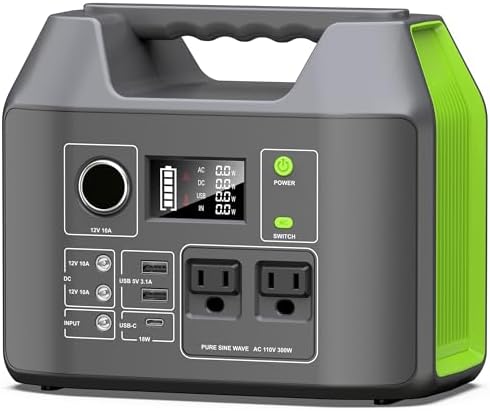
The EnginStar is a compact 296Wh power station with 300W of stated output and two pure sine wave AC outlets. The listed body size is 9 by 5.5 by 7.5 inches, which may help if storage space in your RV is tight. It also has USB outputs, an 18W USB-C port, a car port, and DC outputs for compatible gear.
Unlike the other bundled kits in this roundup, the solar panel is sold separately. The station can be recharged from a wall outlet, a car charger, or a compatible 12–25V solar panel. If you already own a panel in that range, this may be a practical way to add portable power without buying another one; check connector compatibility before connecting it.
The 300W rating limits the EnginStar to smaller devices and appliances within that output. Its 296Wh capacity is close to the other small stations here, but it does not match the longer potential run time of a 1,024Wh model. The product information gives a 1,000-cycle figure and recommends recharging the battery during storage, so follow its care instructions if the unit will sit unused between trips.
Pros:
- Compact listed dimensions for easier storage
- Two pure sine wave AC outlets
- Multiple USB, car, and DC outputs
- Can recharge from AC, car, or a compatible solar panel
Cons:
- Solar panel is sold separately
- 296Wh capacity and 300W output are intended for smaller loads
Verdict: The EnginStar is a sensible compact pick if you already have a compatible solar panel, but the included-panel bundles are more convenient if you are starting from scratch.
How to Choose a Lightweight Solar Generator for RV Camping
Match capacity to the devices you plan to use
Capacity, measured in watt-hours (Wh), gives you a rough sense of how much energy the battery stores. The 280–296Wh models are better suited to charging personal electronics and running small devices. A 1,024Wh station stores considerably more energy, but it is also larger to carry. Make a list of the devices you want to power and check both their energy use and how long you expect to use them. Battery capacity does not equal exact run time because conversion losses and device usage affect the result.
Check output wattage and startup needs
Output, measured in watts (W), tells you how much power the station can supply at one time. A 300W model cannot run an appliance that needs more than its rated output. Some devices, especially those with motors or compressors, may also need extra power when they start. Compare your device’s running and startup requirements with the station’s continuous and peak ratings before buying. A peak figure is not the same as a continuous output rating.
Think about the full kit’s weight and storage
Power-station weight is only part of the load. A separate foldable panel, cables, and accessories also take up space and add weight. Among these picks, the Jackery 300 has a stated station weight of 7.5 pounds, while the Jackery 1000 v2 is 23.3 pounds. The supplied information does not list weights for every model, so check the product details for the complete kit if you need to lift it often or store it in a small RV compartment.
Compare the panel’s output with the battery size
A bundled solar panel makes it easier to start charging, but its wattage matters. The BROWEY’s built-in 40W panel is convenient, while its larger battery can also accept a compatible external panel for up to 200W of solar input. The ZeroKor includes a 60W panel, and the Jackery bundles include 200W and 40W panels, respectively. These numbers describe panel capacity, not guaranteed real-world charging speed: sunlight, shade, angle, and conditions all affect results.
Look at ports and charging options
Count the devices you expect to connect and check the ports each one needs. AC outlets suit compatible household-style plugs, while USB-C, USB-A, car, and DC ports can power other gear. Also consider whether you can recharge from a wall outlet or vehicle when solar conditions are poor. If you plan to use a specific cable or solar panel, confirm that its connector and input range match the power station.
Understand battery chemistry and care
Some models list LiFePO4 batteries and cycle-life claims, while others do not state their battery chemistry in the supplied product details. Battery life figures are manufacturer claims and can depend on use and care. Follow the included instructions for charging, storage, temperature, and long periods without use. Do not assume two stations with similar capacity will have the same expected lifespan or charging behavior.
Set realistic expectations for RV power
Portable power stations can be useful for electronics and selected small appliances, but they are not automatically a replacement for an RV’s full electrical system. High-draw appliances can empty a battery quickly, and an inverter’s wattage rating does not tell you how long the battery will last. Check the power requirements of each appliance, and consider how much energy you can realistically restore from solar during your trip.
Frequently Asked Questions
What size solar generator do I need for RV camping?
It depends on what you want to power. A 280–296Wh station can suit basic electronics, while a 1,024Wh unit offers more stored energy for longer use or additional devices. Check the wattage and energy needs of your gear before choosing.
Can a 300W power station run an RV air conditioner?
Do not assume it can. The 300W models in this guide are intended for smaller loads, and an RV air conditioner may require more power than their rated output. Check the appliance’s running and startup wattage against the station’s specifications.
Is a built-in solar panel better than a separate panel?
A built-in panel can reduce the number of separate items you carry, as with the BROWEY. A separate panel may offer more charging capacity, depending on the model and setup. Compare panel wattage with battery capacity and consider whether you value convenience or greater solar input more.
How long will a solar generator run my devices?
There is no single run time for a power station. It depends on battery capacity, the device’s energy use, conversion losses, and how often the device runs. Use the station’s watt-hour capacity and your device’s power requirements as a starting point, then leave room for real-world losses.
Can I recharge these stations from my RV?
Several models list vehicle charging as an option. Check each product’s included cable, input requirements, and charging instructions to confirm compatibility with your vehicle. Vehicle charging should not be confused with charging from an external solar panel.
Do I need to buy a solar panel separately?
Not for the listed Jackery 1000 v2, BROWEY, ZeroKor, or Jackery 300 bundles, which include panels according to their supplied product details. The EnginStar listing says its solar panel is sold separately. Confirm the package contents before ordering, since bundled components can be listed or shipped separately.
Final Recommendation
For the lightest carry, the Jackery Solar Generator 300 is the standout, though its 292Wh capacity is best for modest loads. If you need more stored energy and higher output, the Jackery 1000 v2 offers a 1,024Wh battery and a 200W panel, at the cost of more weight. For basic electronics on a tighter power budget, the ZeroKor bundle includes a 60W panel, while the EnginStar is worth considering if you already own a compatible one.