

Grow bags give you a flexible way to grow vegetables, flowers, and other plants without committing to permanent garden beds. Their breathable fabric can help excess water drain away, while handles make it easier to move a planted container. The right choice depends on how much soil and space you need, how many plants you plan to grow, and whether features such as a harvest window or plant labels matter to you.
Quick Comparison: Best Grow Bags
| Product | Capacity | Pack size | Standout feature |
|---|---|---|---|
| Land Guard Fabric Grow Bags | 10 gallons | 4 bags | Thick nonwoven fabric and handles |
| VIVOSUN Fabric Grow Bags | 5 gallons | 5 bags | 300G fabric and reinforced handles |
| Cavisoo Potato Grow Bags | 10 gallons | 5 bags | Harvest-viewing window |
| JERIA Grow Bags | 10 gallons | 12 bags | Plant labels included |
| LITLANDSTAR Fabric Grow Bags | 10 gallons | 10 bags | Two-tone design and label pockets |
Our Picks: Best grow bags reviews
Land Guard: A simple four-pack of roomy 10-gallon bags

Land Guard’s set includes four 10-gallon bags made from thick nonwoven fabric. Each bag has handles, and the breathable material is designed to let excess water drain through rather than sit around the roots. The 10-gallon capacity offers more room for soil than the smaller VIVOSUN bags in this roundup.
This is a straightforward option if you want a few larger containers for a patio, garden, or other planting area. Handles can help when you need to shift a bag, but a bag filled with damp soil and a mature plant can be heavy. Plan to choose its spot before filling it if you do not expect to move it often.
There are no extra features such as a viewing window or label pocket, so the appeal is mainly the larger capacity, four-bag set, and simple design. The main tradeoff is that the set provides fewer containers than the 10- and 12-pack options below.
Pros:
- Four bags provide 10-gallon capacity each.
- Nonwoven fabric is designed for drainage and airflow.
- Handles make the bags easier to reposition.
- Simple design suits gardeners who do not need extra pockets or windows.
Cons:
- The four-bag set offers fewer containers than the larger multipacks.
- Filled bags may be difficult to move, even with handles.
Verdict: Choose Land Guard if you want a small set of roomy fabric pots with handles and do not need specialized features.
VIVOSUN: Smaller five-gallon bags with reinforced handles

VIVOSUN’s five-pack uses 300G thickened nonwoven fabric and gives each bag a 5-gallon capacity. The smaller size can be useful when you have limited room or want several separate containers without taking up as much space as a row of 10-gallon bags.
The handles are attached with serger stitching, which is a more specific construction detail than simply having fabric strips at the sides. The material is described as permeable and BPA-free, and the bags are intended to drain excess water. Like other fabric pots, they may need more frequent watering than a container that holds moisture for longer, depending on your conditions.
Compared with the other picks, this set offers less soil capacity per bag but has a practical size for smaller planting plans. It is a sensible choice when five smaller containers are more useful than a few larger ones.
Pros:
- Five separate bags offer flexibility for smaller planting spaces.
- 300G nonwoven fabric is described as thickened and permeable.
- Serger-stitched handles are designed to support a filled bag.
- Smaller capacity can be easier to place than a 10-gallon pot.
Cons:
- Each bag holds less than the 10-gallon options in this roundup.
- Fabric drainage may mean checking soil moisture more often.
Verdict: Pick VIVOSUN if you prefer several smaller bags and want reinforced handles rather than maximum capacity.
Cavisoo: Ten-gallon potato bags with a harvest window

Cavisoo’s five-bag set gives you 10 gallons of capacity per bag. The bags are made from 300g nonwoven fabric, with polypropylene webbing handles attached using X-shaped stitching. A viewing window is the distinctive feature: it lets you check on the contents without opening the entire bag, which is especially relevant for potatoes.
The larger capacity may suit gardeners who want more soil volume than a 5-gallon container provides. The viewing flap is useful for checking progress, but it is a specialized extra rather than a must-have for every crop. If you are growing plants that do not need a harvest window, a simpler bag may be a better fit.
The product description says the fabric is reusable for more than three years. That is a manufacturer claim, not a guaranteed lifespan; actual wear can depend on how the bags are used, stored, and exposed to the elements.
Pros:
- Five 10-gallon bags offer substantial capacity.
- Viewing windows let you check the contents for harvesting.
- 300g nonwoven fabric is designed for drainage and airflow.
- Reinforced webbing handles use X-shaped stitching.
Cons:
- The viewing window is most useful for crops where checking the harvest matters.
- The stated reuse period should not be treated as a guaranteed lifespan.
Verdict: Cavisoo is a strong fit if you want 10-gallon capacity and expect to use the viewing window for potatoes or similar crops.
JERIA: A large 12-pack for organizing a bigger planting area

JERIA’s set includes 12 grow bags, each with a listed capacity of 10 gallons, plus 12 plant labels. The stated dimensions for each bag are 16 inches in diameter and 12 inches high. That detail can help you plan how much floor or patio space the group will need.
The polyester felt fabric is described as breathable and reusable, with drainage intended to let excess water escape. Built-in handles support moving the bags, and the fabric pots can be folded for storage when empty. The plant labels are a handy addition if you grow several varieties and want to keep them identified.
This is the largest pack in the roundup, so it makes more sense for a sizable planting plan than for someone who only wants a couple of containers. Keep in mind that 12 filled 10-gallon bags take up considerable space and require a substantial amount of potting mix.
Pros:
- Twelve 10-gallon bags suit a larger container garden.
- Plant labels are included for identifying what you grow.
- Listed dimensions help with space planning.
- Handles and foldable fabric support moving and storing empty bags.
Cons:
- The large set may be more than a small garden needs.
- Filling and placing a dozen 10-gallon bags requires space and soil.
Verdict: Choose JERIA if you want many large containers and value included labels for keeping a varied planting area organized.
LITLANDSTAR: A 10-pack with two-tone fabric and label pockets
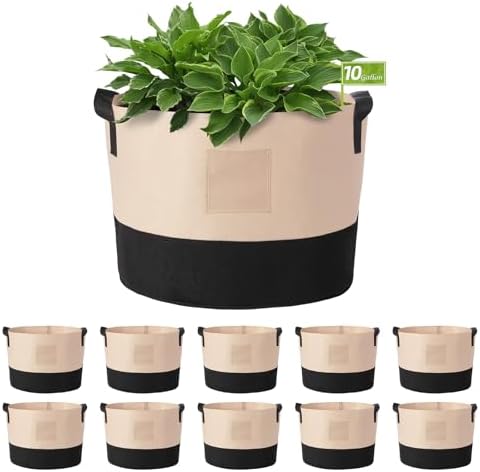
LITLANDSTAR’s set contains ten 10-gallon fabric bags. Its two-tone black-and-camel design stands out from the plain black options, and each bag has a transparent label pocket for identifying plants. Reinforced nylon handles are intended to make the bags easier to move.
The description emphasizes breathability and drainage through the sides and bottom. It also says the black bottom can absorb and retain heat, but how much that affects a plant will depend on the growing conditions and placement. The bags are described as suitable for vegetables, herbs, flowers, and other plants, though you should still match each plant to an appropriate container size and growing setup.
With ten bags, this set falls between the smaller Land Guard and larger JERIA packs. The labels and distinctive appearance are useful if organization and presentation matter to you; if not, a simpler set may cover the same basic need.
Pros:
- Ten 10-gallon bags provide a generous number of containers.
- Transparent label pockets help identify plants.
- Reinforced nylon handles are included.
- Two-tone fabric offers a different look from plain black bags.
Cons:
- The two-tone design may not matter if function is your only priority.
- A 10-pack still needs ample room and potting mix.
Verdict: LITLANDSTAR is a good option if you want multiple 10-gallon bags with label pockets and a more distinctive look.
How to Choose the Best Grow Bags
Choose a capacity that fits your plants and space
Capacity affects how much soil each bag holds and how much room it takes up. The options here range from 5-gallon bags to 10-gallon bags. Smaller bags can be easier to fit into a tight space, while larger ones give you more soil volume. Check the bag’s listed capacity and dimensions where available, then consider how many containers will fit in your planting area.
Look at fabric and drainage details
These products use nonwoven or felt-style fabric designed to let water drain and air reach the root area. That can help prevent excess water from staying trapped in a pot, but it also means you should check soil moisture regularly. The right watering schedule depends on the plants, weather, sun exposure, and potting mix, so avoid assuming that every fabric bag will dry at the same rate.
Consider how you will move the bags
Handles are useful when bags are empty or only partly filled. Once a bag contains soil and a mature plant, it can be much heavier and awkward to lift. Reinforced stitching or webbing is a helpful design detail, but it does not remove the weight of the contents. Decide where each bag will live before filling it, especially if you expect to use the larger capacities.
Pick the right pack size
A small set can work well for a patio or a few separate plants; a 10- or 12-pack is better suited to a larger planting plan. Think about the cost and effort of filling every bag, not just the number in the package. Buying more containers than you can place or maintain can leave you with unused bags and extra storage needs.
Decide whether extra features are useful
A harvest window can be helpful when you want to check crops such as potatoes, while plant labels or label pockets can keep different plants organized. These features add convenience but are not essential for every garden. If you are growing a small number of clearly identified plants, a basic bag may be all you need.
Plan for storage and reuse
Fabric bags can be folded when empty, which makes them easier to store than rigid pots. Before putting them away, follow the product care guidance and make sure they are ready for storage. Reuse depends on how the material holds up during planting, handling, and storage; avoid treating a stated lifespan as a promise for every garden or climate.
Frequently Asked Questions
What are grow bags used for?
Grow bags are fabric containers for growing plants in soil. They can be used in places such as patios and outdoor gardens, and they are an alternative to rigid pots or permanent garden beds.
Are fabric grow bags better than plastic pots?
They work differently. Fabric bags are designed to let water drain and air move through the material, while plastic pots are rigid and do not have the same breathable sides. The better choice depends on your plants, watering habits, available space, and preference for a foldable or rigid container.
Do grow bags need more frequent watering?
They may dry out faster than some less-permeable containers because water can drain through the fabric. Check the soil instead of following a fixed schedule, since heat, sunlight, plant size, and potting mix all affect moisture.
Can you move grow bags after filling them?
Handles can help, but a filled bag can become heavy and difficult to lift. It is safest to place the bag where you plan to grow the plant before adding soil, or move it while it is only partly filled.
Which grow bag size should you choose?
Choose based on the plant’s needs and the space you have. The products in this roundup include 5- and 10-gallon options. Check plant-specific growing guidance, and consider the bag dimensions when planning how many containers will fit.
Are grow bags reusable?
The products are described as reusable, but the useful life of a fabric bag depends on its material, handling, and storage conditions. Follow the product’s care instructions and inspect the fabric and handles before reusing a bag.
Do I need a grow bag with a viewing window?
No. A window is a specialized feature that can help you check the contents of a bag, particularly when growing potatoes. For plants where you do not need to inspect a harvest through the side, a standard bag may be sufficient.
Final Recommendation
For a small number of roomy containers, Land Guard offers a simple four-pack of 10-gallon bags. VIVOSUN is the better match if you prefer smaller 5-gallon pots, while Cavisoo stands out for its harvest window. For a larger planting area, compare JERIA’s 12-pack with LITLANDSTAR’s 10-pack and choose based on whether included plant labels or label pockets are more useful to you.