

A box fan can move air through a room, but using one in a window takes more than matching its width to the opening. You also need to think about stability, airflow direction, and whether the fan is designed to fit a window securely. Our picks include portable box fans for flexible use and dedicated window fans with features for a window installation.
Quick Comparison
| Product | Type | Speed settings | Best for |
|---|---|---|---|
| Amazon Basics 3-Speed Box Fan | Portable box fan | 3 | Everyday room circulation |
| COMFORT ZONE Reversible Twin Window Fan | Window fan | 3 | Window ventilation and airflow control |
| COMFORT ZONE 20-Inch Portable Box Fan | Portable box fan | 3 | Moving between rooms or work areas |
| Vornado Model 80 High Velocity Box Fan | Box-style air circulator | 5 | Adjustable room air circulation |
| Vornado TRANSOM Window Fan | Window fan | 4 | Reversible window airflow and remote control |
Our Picks: Best box fan for windows reviews
Amazon Basics 3-Speed Box Fan: A Lightweight Pick for Flexible Room Use
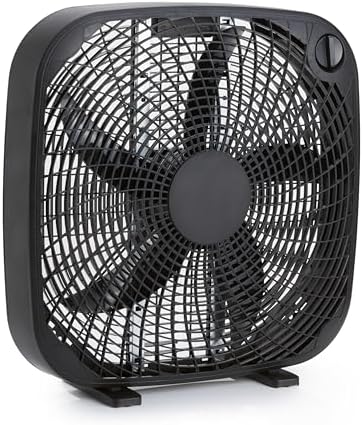
This lightweight, freestanding box fan has three speeds and a carry handle, making it easy to move between rooms. Its extra-large feet are designed to keep it steady on a flat surface, and its compact profile suits spaces where you want air circulation without a large floor fan.
At about 5.8 pounds, it is a practical choice if you plan to reposition the fan during the day. Its listed dimensions are about 20.86 inches wide and 21.33 inches high. Those measurements may help you judge whether it could sit near a window, but this model does not have window expanders or a dedicated window-mounting system. Do not assume it can be safely wedged into an open window.
The three speed settings offer a straightforward way to adjust airflow. Compared with the dedicated window fans below, this is better suited to freestanding use than to bringing outside air in or exhausting indoor air through a window.
Pros:
- Lightweight design with a top carry handle
- Three speed settings for adjustable airflow
- Extra-large feet help stabilize it on a flat surface
- Compact profile for flexible room placement
Cons:
- No built-in window expanders or mounting system
- Does not offer a stated remote control or reversible setting
Verdict: Choose this fan for portable room circulation, but pick a dedicated window model if you need a unit designed to fit and operate in a window.
COMFORT ZONE Reversible Twin Window Fan: A Flexible Ventilation Choice

This twin window fan is designed to bring fresh outdoor air into a room or help draw warm, stale air out. It has two fan blades, three speed settings, and accordion expanders that adjust from 22¼ to 33 inches wide and lock in place to help secure the fit.
Its airflow direction changes manually: turn the fan around in the window to switch between intake and exhaust. That is less convenient than an electronically reversible model, but the controls remain simple. A removable bug screen and fabric cover help keep out bugs, dust, and outdoor debris.
Removable feet let you use the unit as a freestanding desk or floor fan when it is not in the window. Check your window opening and installation needs before buying; the adjustable width is useful, but it does not remove the need for a stable, properly fitted setup.
Pros:
- Designed specifically for window airflow
- Adjustable width with auto-locking expanders
- Can be turned around manually for intake or exhaust
- Includes a removable screen, cover, and tabletop feet
Cons:
- Changing airflow direction requires turning the unit around
- Fit is limited to windows within its stated width range
Verdict: This is a strong fit if you want a window-specific fan with intake and exhaust options and your window measures within its adjustment range.
COMFORT ZONE 20-Inch Portable Box Fan: A Simple Fan for Multiple Spaces

This 20-inch portable box fan has a rotary dial with three speeds and a carry handle for moving it around the home, garage, or workspace. Its straightforward controls are easy to understand, and the lightweight construction helps when you want to shift airflow from one area to another.
The fan is described for both floor and window use, but it does not have the adjustable window expanders found on the COMFORT ZONE twin window fan. If you plan to position it in an open window, confirm that your setup is stable and secure; do not rely on a loose fit to hold it in place.
Compared with the Amazon Basics model, this fan is identified as a 20-inch unit and is aimed at a range of spaces, including larger work areas. It still has three speeds and a portable design, rather than window-specific intake and exhaust controls.
Pros:
- 20-inch size with three speed settings
- Rotary dial makes speed selection simple
- Carry handle supports moving it between spaces
- Designed for use in home and work areas
Cons:
- No built-in window expanders or locking fit system
- Does not offer a stated remote or reversible airflow control
Verdict: Pick this model if you want a portable 20-inch box fan for general circulation, rather than a window fan with an integrated fitting system.
Vornado Model 80: A Five-Speed Box-Style Air Circulator

The Vornado Model 80 is a 20-inch box-style air circulator with five speed settings. Its removable grille is designed to make cleaning easier, and its range of speeds gives you more adjustment choices than the three-speed box fans in this roundup.
This model is described as a whole-room circulator, not as a window fan with an adjustable mounting system. If your main goal is to fit a fan into a window, the COMFORT ZONE twin window fan or Vornado TRANSOM offers features aimed more directly at that job.
At the time of writing, this product was unavailable.
Pros:
- Five speed settings for more airflow choices
- Removable grille is designed to simplify cleaning
- 20-inch format for room circulation
- Includes a stated five-year replacement warranty
Cons:
- Not described as a dedicated window-mount fan
- Does not include window expanders or a window-fit system
Verdict: Consider this model for adjustable room circulation and easier grille cleaning, but look to a dedicated window fan for a more secure window installation.
Vornado TRANSOM Window Fan: A Low-Profile Fan with Electronic Reversal

The TRANSOM is a low-profile window fan built for single- or double-hung windows between 26 and 40 inches wide. It is 7.16 inches tall, 26 inches wide, and 5.73 inches deep, and uses a Soft-fit foam block system to help create a snug fit. The window opening needs to be at least 8 inches tall.
Unlike the manually reversible COMFORT ZONE window fan, this model switches between airflow and exhaust with an electronic control. It also has four speed settings, a remote control, and auto temperature control. These features make it a useful option if you want to change airflow direction without removing or turning the unit around.
Installation is limited to a horizontal position, and removing the window screen may be necessary depending on the depth of your window. Measure the opening and check the installation requirements before choosing it; its low profile does not mean it will fit every window.
Pros:
- Electronically switches between intake and exhaust
- Remote control, four speeds, and auto temperature control
- Designed for a stated range of single- and double-hung window widths
- Low-profile design with a foam block fit system
Cons:
- Can only be installed horizontally
- Screen removal may be necessary, depending on window depth
Verdict: Choose the TRANSOM if you want a purpose-built window fan with electronic airflow reversal and your window meets its size and installation requirements.
How to Choose the Best Box Fan for a Window
Decide between a box fan and a window fan
A portable box fan is useful for moving around the room, but it may not include parts to secure it in a window. A dedicated window fan is designed for that setting and may have expanders, foam blocks, or other fit features. If you want to ventilate through an open window, start with a window-specific model and follow its installation instructions.
Measure the window opening
Measure the width and height of the open window, along with the depth of the sill or frame where the fan will sit. Compare those measurements with the fan’s stated size and fit range. For example, the COMFORT ZONE twin window fan adjusts from 22¼ to 33 inches wide, while the TRANSOM fits windows 26 to 40 inches wide and needs an opening at least 8 inches tall.
Think about airflow direction
Consider whether you want to draw outdoor air in, push indoor air out, or do both at different times. The COMFORT ZONE twin window fan changes direction by turning the unit around. The Vornado TRANSOM switches electronically between intake and exhaust, which avoids repositioning the fan.
Check how the fan will be secured
A window fan needs a stable fit. Look for features such as locking expanders or a fit system suited to your window, and follow the manufacturer’s installation steps. A portable box fan’s feet can help it stand on a flat surface, but they are not a substitute for a window-mounting system.
Choose controls that fit your routine
Three speed settings are enough for basic adjustments. More speeds give you additional choices, while a remote can make adjustments easier when the fan is installed across the room. If you plan to change airflow direction often, electronic reversal can be more convenient than turning the unit around.
Consider screens, covers, and cleaning
A removable screen or cover can help limit bugs and outdoor debris when using a window fan. Dust can also build up on fan grilles, so consider whether the grille can be removed for cleaning. Always follow the care instructions for the specific model.
Frequently Asked Questions
Can you use a regular box fan in a window?
You may be able to position a portable box fan near an open window, but not every model has a window-mounting system. Check the fan’s instructions and make sure it is stable and secure. A dedicated window fan is a better choice when you need a designed fit.
What is the difference between a box fan and a window fan?
A box fan is generally a portable fan for moving air around a room. A window fan is made to fit in a window and is often designed to draw air in, push air out, or switch between the two. Window-specific fit features can make installation more practical.
What window measurements should I take before buying?
Measure the window’s width and height when open, plus the depth of the frame or sill. Compare all measurements with the fan’s fit range and installation requirements. Check whether the model needs a minimum opening height or screen removal.
What does reversible airflow mean?
Reversible airflow lets a fan bring outdoor air in or move indoor air out. Some models change direction electronically; others need to be turned around in the window. Check how the specific fan switches modes before you buy.
Is a wider fan always better for a window?
No. The fan must fit the opening and be installed securely. A model that is too wide or too tall may not fit properly, even if it appears to offer a larger airflow area. Match the fan’s measurements and fitting range to your window.
Can I use a window fan as a floor or desk fan?
Some window fans include removable feet for freestanding use. The COMFORT ZONE twin window fan includes tabletop feet, while other models may be intended mainly for window installation. Check each model’s instructions before using it in a different position.
Final Recommendation
For a fan made specifically for window use, the COMFORT ZONE Reversible Twin Window Fan offers adjustable expanders and a choice of intake or exhaust by turning the unit around. If you prefer electronic reversal and remote control, the Vornado TRANSOM is another purpose-built option, provided your window meets its size and installation requirements. For flexible room circulation rather than a secure window fit, consider a portable box fan such as the Amazon Basics or COMFORT ZONE 20-inch model.