

A doorway trainer can add pull-ups, chin-ups, and other upper-body exercises to your home routine without taking up the floor space of a larger gym. The right choice depends on your doorway’s dimensions, the bar’s mounting style, and the amount of confidence you have in the frame it will use. These five options include multi-grip bars, models with added accessories, and a simpler pick for shoppers who want to compare the basics.
Quick Comparison: Best Doorway Trainers
| Trainer | Stated capacity | Doorway fit | Standout feature |
|---|---|---|---|
| ALLY PEAKS Heavy-Duty Multi-Grip Pull-Up Bar | Up to 440 lb | 24–32 in wide; depth 4.7–8.27 in | Double silicone frame protection |
| ProsourceFit Multi-Grip Chin-Up/Pull-Up Bar | Up to 300 lb | 24–36 in wide; up to 6 in thick | 12 grip positions |
| Ally Peaks Pull-Up Bar with Resistance Bands | Up to 440 lb | Designed for a range of door-frame thicknesses; check fit before buying | Includes bands, handles, and a door anchor |
| Japard Pull-Up Bar for Doorway | Up to 444 lb | 27.1–41.3 in wide; frame depth at least 3 in | Wide anti-skid pads and full-length foam grip |
| FitBar Doorway Pull-Up Bar | Not specified in the available product details | Not specified in the available product details | Basic doorway pull-up and chin-up option |
Capacity and fit figures above are manufacturer-provided specifications, not a substitute for checking your own doorway and following the product’s installation instructions.
Our Picks: Best doorway trainers reviews
ALLY PEAKS Heavy-Duty Bar: A Strong All-Around Pick
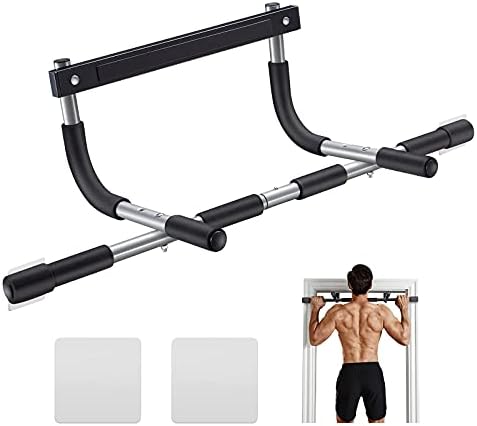
This no-screw doorway bar uses leverage to sit against the frame, so you can install and remove it without drilling holes. Its steel construction is listed with a 440-pound capacity, and foam-covered handles provide several grip options for upper-body exercises.
A notable detail is the double silicone protection: silicone at the frame-contact points plus removable pads intended to help protect the doorway. That may appeal if you want to limit marks, though a protective pad cannot make an unsuitable or weak frame safe. The bar is listed for doorways 24 to 32 inches wide, with a depth of 4.7 to 8.27 inches and trim-height and thickness requirements. Measure all of these before ordering.
The maker also lists pull-ups, push-ups, dips, and hanging crunches as possible exercises. Because this style depends on leverage and frame contact, install it exactly as directed and check that it is secure before each workout. It is a good fit for someone who wants a removable, multi-grip bar and whose doorway falls within the stated measurements. Compared with the ProsourceFit, it has a higher stated capacity but a narrower listed width range.
Pros:
- Steel construction with a stated capacity of up to 440 pounds
- Multiple foam-covered grips for varied hand positions
- Double silicone protection and removable pads at the frame
- Removable, no-screw installation design
Cons:
- Its width and depth limits rule out some doorways
- Frame condition and correct installation are essential for safe use
Verdict: Choose this ALLY PEAKS bar if you want a removable multi-grip trainer with silicone frame protection and your doorway matches its specified dimensions.
ProsourceFit Multi-Grip Bar: A Flexible Grip-Position Choice

The ProsourceFit is a steel, slip-in doorway trainer with 12 listed grip positions. Its handles are designed for wide, close, and hammer-grip exercises, giving you more ways to change your hand position than a basic straight bar. The maker also lists pull-ups, chin-ups, sit-ups, push-ups, dips, and leg raises among its possible exercises.
It is specified for standard doorways from 24 to 36 inches wide and frames up to 6 inches thick. The stated capacity is 300 pounds, lower than the listed capacities of the two ALLY PEAKS bars and the Japard. That figure is worth weighing against your needs, especially if you expect to add significant dynamic movement or use the bar for more than straightforward pull-ups.
Two optional foam covers are included for the outer handles to help protect the frame, and the product description lists a limited lifetime warranty. It may suit shoppers who value a wider range of hand positions and a broader doorway width range than the first ALLY PEAKS option. As with any doorway-mounted bar, confirm the frame dimensions and follow the setup instructions rather than assuming that a “standard” doorway will fit.
Pros:
- 12 grip positions for different hand placements
- Fits listed doorway widths from 24 to 36 inches
- Optional foam covers are included for outer handles
- Limited lifetime warranty is listed by the maker
Cons:
- Its stated capacity is 300 pounds, below several other picks here
- Fit still depends on frame thickness and doorway construction
Verdict: Pick the ProsourceFit if grip variety and a wider listed doorway range matter more to you than the highest stated weight capacity.
Ally Peaks Bar with Bands: Best for Adding More Options

This Ally Peaks model shares several features with the first pick: thickened steel, foam-covered handles, silicone frame protection, and a stated capacity of up to 440 pounds. Its package adds two resistance bands, two handles, and a door anchor, which can give you more exercise options without buying those accessories separately.
The bar uses a two-level hole design intended to match different frame thicknesses while maintaining its structure. The supplied product information does not give a specific doorway width or depth range, so check the current listing and installation guide before purchasing; do not assume it fits the same dimensions as the other Ally Peaks model. The product description also states that its bolts passed a load test, but that claim does not replace proper installation or checking your doorway.
This is the most accessory-focused choice in the group. The bands and anchor may be useful for resistance exercises, while the bar itself is aimed at pull-ups and other upper-body movements. In comparison with the first Ally Peaks option, the main distinction is the included band set and the adjustable hole design—not a clearly documented wider fit range.
Pros:
- Includes two resistance bands, handles, and a door anchor
- Steel construction with a stated capacity of up to 440 pounds
- Silicone frame protection and multiple grip positions
- Two-level adjustment design is intended to fit different frame thicknesses
Cons:
- The supplied details do not specify a doorway width or depth range
- Its extra accessories may be unnecessary if you only want a pull-up bar
Verdict: Choose this model if you want a doorway bar plus resistance-band accessories, but verify the exact doorway fit before ordering.
Japard Pull-Up Bar: A Wide-Range Fit for Larger Doorways

The Japard bar is listed for door frames from 27.1 to 41.3 inches wide, a broader range than the other picks with stated width limits. Its maker gives a capacity of up to 444 pounds and describes soft anti-skid PVC protection, large pads, and a full-length EVA foam grip. The design is intended to support wide- and close-grip training.
There are important installation limits: the doorway depth must be at least 3 inches, and the instructions say to use only solid, stable surfaces. The maker warns against installing it on ceramic tile, glass, or hollow or weak frames. Those cautions matter; a wide fit range does not mean every opening or surface is suitable.
The product is described as a no-screw, no-drill option, but you still need to measure carefully and confirm the bar is secure before exercising. Its larger stated width range may be helpful if narrower bars do not fit your opening. Compared with the ProsourceFit, it lists a higher capacity and wider maximum doorway width, though their mounting details differ.
Pros:
- Listed for doorway widths from 27.1 to 41.3 inches
- Stated capacity of up to 444 pounds
- Large anti-skid pads and soft PVC protection
- Full-length foam grip for different hand positions
Cons:
- Requires at least 3 inches of doorway depth and a solid, stable surface
- Not suitable for the weak or fragile surfaces listed in its instructions
Verdict: The Japard is worth considering if you need a wider doorway range, provided your frame meets its depth and stability requirements.
FitBar Doorway Bar: A Simple Option with Specs to Confirm

The FitBar is presented as a doorway pull-up and chin-up bar for home workouts. Beyond that basic description, the supplied product information does not provide details about its construction, capacity, grip layout, installation method, or doorway measurements. That makes it harder to compare with the other four options on fit and safety specifications.
Before choosing it, check the product listing for the exact doorway range, permitted frame depth, maximum load, installation steps, and any required frame features. These details are especially important for a bar that supports your body weight. Do not rely on the product name alone to determine whether it fits your home.
Compared with the other picks, the FitBar has the least specification detail available here. It may suit shoppers who find the missing information in the listing and want a straightforward chin-up or pull-up trainer, but it is not the easiest option to assess based on the details provided.
Pros:
- Designed for doorway pull-ups and chin-ups
- Simple product focus for home upper-body workouts
Cons:
- Capacity and doorway measurements are not specified in the available details
- Installation and grip features are not described in the supplied information
Verdict: Consider the FitBar only after confirming its load limit, doorway fit, and installation requirements in the product listing.
How to Choose a Doorway Trainer
Measure the opening and frame
Measure the doorway width, the depth of the frame, and any trim that could affect how the bar sits. Compare each measurement with the product’s stated limits, not just the opening’s width. For example, the first ALLY PEAKS bar lists both width and depth ranges, while the Japard lists a minimum frame depth. If a product does not clearly state its fit range, check the listing or instructions before buying.
Check the mounting style and frame condition
Doorway bars may use leverage, slip-in components, or other frame-contact designs. Follow the instructions for the specific model and inspect the frame for weakness or damage. A trainer should not be used on a doorway that does not meet its requirements. The Japard instructions specifically caution against weak or hollow frames and certain fragile surfaces; take similar care with any model and do not assume a frame is suitable just because the bar appears to fit.
Compare capacity figures with your intended use
Look at the manufacturer’s stated capacity, but treat it as a product specification rather than a guarantee that every doorway installation is safe. Your frame, the bar’s setup, and the way you move can all matter. If you plan to do more than controlled pull-ups, check whether the maker’s instructions allow those movements. Install the bar as directed and test that it is secure before each workout.
Choose grip positions that match your routine
A straight or basic bar may be enough if you mainly do pull-ups and chin-ups. Multi-grip designs offer more hand positions, which can help you vary your routine. The ProsourceFit lists 12 grip positions, while the Ally Peaks options also describe multiple grips. More positions are useful only if they feel comfortable and fit the way you plan to train.
Decide whether accessories are useful
Some doorway trainers include protection pads or exercise accessories. The first ALLY PEAKS model lists removable silicone pads, and the band-equipped Ally Peaks includes resistance bands, handles, and a door anchor. These extras can add options, but they should not outweigh fit and installation requirements. If you will not use the accessories, a simpler bar may be a better match.
Think about storage and frame protection
A removable bar can be convenient if you need to clear the doorway or have limited space. Check how the model sits against the frame and whether it includes contact pads or covers. Protective materials may help reduce marks, but they do not guarantee a damage-free result on every finish. Make sure the frame is clean and the trainer is installed as instructed.
Frequently Asked Questions
Are doorway trainers safe to use?
They can be used safely only when the specific bar is installed as directed on a doorway that meets its requirements. Check the frame’s condition, verify all measurements, and confirm the bar is secure before each workout. Do not use a model on surfaces its instructions warn against.
Will every doorway pull-up bar fit a standard doorway?
No. Width, depth, trim, and frame construction can vary. For example, the listed width ranges in this selection differ, and some models also specify a frame-depth requirement. Measure your doorway and compare every relevant dimension with the product instructions.
Can a doorway trainer damage the frame?
Frame-contact bars can press or rub against the doorway. Pads and protective materials are intended to help, but they cannot promise that every finish will remain unmarked. Follow the setup instructions, check the contact points, and avoid using a bar on a weak or unsuitable frame.
What exercises can I do with a doorway trainer?
Pull-ups and chin-ups are the main uses. Some product descriptions also list exercises such as push-ups, dips, sit-ups, leg raises, and hanging crunches. The exercises a particular bar can support depend on its design and instructions, so confirm the approved uses before trying other movements.
Which doorway trainer has the widest listed fit range?
The Japard is listed for door frames from 27.1 to 41.3 inches wide. It also requires at least 3 inches of frame depth and a solid, stable surface, so width alone does not determine whether it will fit your doorway.
Do I need a multi-grip bar?
Not necessarily. If you mainly do standard pull-ups or chin-ups, a simpler design may be enough. A multi-grip bar can be useful if you want to vary hand positions, but first make sure the grip layout is comfortable and the bar fits your doorway.
Which pick is best if I want resistance bands?
The third pick, the Ally Peaks model with bands, includes two resistance bands, two handles, and a door anchor. Confirm the doorway fit and follow the instructions for both the bar and its accessories before using them.
Final Recommendation
For a well-specified removable bar with multiple grips and silicone frame protection, the first ALLY PEAKS model is the strongest all-around choice if your doorway fits its measurements. Choose the ProsourceFit for its 12 grip positions, the band-equipped Ally Peaks for extra exercise accessories, or the Japard if you need its wider listed fit range and have a suitable frame. The FitBar may be worth considering, but confirm its capacity and doorway requirements before deciding.