

A water leak detector with an automatic shutoff valve can do more than sound an alarm: it can cut the water supply when a sensor detects moisture. That can help limit damage from leaks near washing machines, water heaters, sinks, and other plumbing. The right setup depends on how many areas you need to monitor, whether your pipes or existing valve are compatible, and whether you want a wired or app-connected system.
Quick Comparison
| Product | Included sensors | Shutoff setup | Standout feature |
|---|---|---|---|
| E-SDS Automatic Water Leak Detector | 1 wired sensor | 3/4-inch NPT brass ball valve | Audible and visual alarm; battery backup option |
| GXFCHYL Water Leak Detector | 2 wired sensors | DN 20 ball valve | 8 sensor connections and LED indicators |
| BINGOX Water Leak Detector | 2 sensors | 3/4-inch NPT brass valve | Supports up to 8 sensors |
| iSpring LS43 Water Leak Detector | 2 sensors | 3/4-inch NPT automatic ball valve | Can connect up to 8 sensors |
| VETORVI Water Leak Detector | 4 wireless sensors | Attaches to compatible 1/2- or 3/4-inch ball valves | Local shutoff automation through a Zigbee gateway |
Our Picks: Best water leak detectors with shutoff valve reviews
E-SDS Automatic Water Leak Detector: A Simple Wired Setup

The E-SDS is a wired leak-detection kit with a 3/4-inch NPT brass ball valve, a controller, and one water sensor. When the sensor detects water, the controller sounds an alarm, flashes its lights, and closes the valve. The system also has manual open and close buttons, plus a reset button for after a leak is addressed.
The sensor has a 19.68-foot cable, which gives you some flexibility in placing it near a likely leak while keeping the controller closer to the valve. The controller uses an AC adapter and can take four AA batteries as backup; the batteries are not included. The listed sensor response is within two seconds after water reaches it, so placement matters: it needs to be where a leak can reach the sensor.
This is a practical option if you want a direct, alarm-and-shutoff system without a smart-home app. The main trade-off is coverage: one sensor may not be enough for several leak-prone areas. You can also expect the valve installation to require a compatible plumbing connection, so check pipe size and fitting details before buying.
Pros:
- Includes a 3/4-inch NPT brass ball valve.
- Provides audible and visual alerts along with automatic shutoff.
- Long wired sensor cable helps with placement.
- Offers battery backup as an option, with batteries sold separately.
Cons:
- Only one sensor is included.
- Requires an AC outlet for normal controller power, and backup batteries are not included.
Verdict: Choose the E-SDS if you want a straightforward wired system for one key leak area and your plumbing matches its 3/4-inch NPT valve.
GXFCHYL Water Leak Detector: Multiple Sensor Connections

This GXFCHYL system pairs a shutoff valve with a controller that has eight sensor connections and eight LED alarm indicators. Two sensors are included, each with a 19.69-foot cable. When a sensor detects water, the system is designed to trigger an alarm and close the valve, giving you a way to monitor more than one spot without relying on wireless sensors.
The compact controller may be easier to fit into a tight utility area than a larger control box. The listed valve is DN 20, and the product information says it can adapt to DN8-DN25 valves and household systems operating at a lower working water pressure of 1 MPa. Those specifications make it especially important to confirm your plumbing size and pressure before choosing it.
Its eight sensor connections are useful if you want to build out coverage over time. However, only two sensors come with the kit, and the product information does not specify a sensor cable length beyond the included cables. Compared with the E-SDS, it offers more sensor ports but less clarity around the valve connection in familiar US pipe-sizing terms.
Pros:
- Includes two wired sensors with long cables.
- Eight sensor connections allow for expanded coverage.
- Uses audible and visual alerts, including LED indicators.
- Compact controller design can suit a small installation area.
Cons:
- Valve and pressure specifications need careful checking against your plumbing.
- Only two sensors are included despite the additional sensor connections.
Verdict: Consider the GXFCHYL if you want a wired system with room for more sensors and have confirmed that its valve specifications suit your plumbing.
BINGOX Water Leak Detector: Expandable Brass-Valve Kit

The BINGOX kit includes a controller, two leak sensors, and a 3/4-inch NPT brass motorized valve. When a sensor detects water, the system is designed to sound an alarm and shut off the water flow. It can support up to eight sensors, which gives you the option to monitor additional areas with compatible sensors.
Its focus is on local detection and shutoff rather than app-based controls. The product information describes the kit as a DIY installation, but the valve connects to a water line, so the work still needs to match your plumbing and comfort level. If you are not sure how to install a valve safely, consider getting help from a qualified plumber.
Compared with the E-SDS, BINGOX includes two sensors rather than one and can support a larger sensor network. The supplied information does not list sensor cable length, power backup, or a warranty, so those details are worth checking on the product listing before you decide. It is a better fit for shoppers who value sensor expansion over app features.
Pros:
- Includes a 3/4-inch NPT brass shutoff valve.
- Comes with two sensors and supports up to eight.
- Combines an audible alarm with automatic water shutoff.
- Designed for continuous leak monitoring.
Cons:
- Product information does not specify sensor cable length or power backup.
- Valve installation still requires a suitable connection to your water line.
Verdict: The BINGOX is worth considering if you want a brass-valve kit with two included sensors and the option to add more, and you can verify the installation and power details first.
iSpring LS43: A Whole-Home System with Expandable Sensors

The iSpring LS43 is designed to go on a whole-house water pipe and includes a 3/4-inch NPT automatic shutoff ball valve and two detection sensors. When the system detects a possible leak, it is designed to sound an alarm and close the water supply. The controller can connect to as many as eight sensors, so you can add coverage beyond the two included.
This kit may suit you if you want a system from a brand that also lists a one-year warranty and lifetime support. Those support terms are useful considerations, though they do not replace checking installation requirements or confirming that the valve fits your plumbing. The supplied product information does not describe app control, battery backup, or sensor cable length.
Compared with the E-SDS, the iSpring includes an additional sensor and has a stated path to eight sensors. It is less detailed in the supplied specifications about power backup and alert features, so it may be less appealing if those are priorities. Its whole-house pipe design makes valve compatibility and proper installation especially important.
Pros:
- Includes two detection sensors and supports up to eight.
- Comes with a 3/4-inch NPT automatic shutoff ball valve.
- Designed to monitor a whole-house water pipe.
- Lists a one-year warranty and lifetime support.
Cons:
- Power backup and sensor cable length are not specified in the supplied details.
- Whole-house installation requires careful pipe and valve compatibility checks.
Verdict: The iSpring LS43 is a strong option to consider for whole-house shutoff with expandable wired sensors, especially if its listed support terms matter to you.
VETORVI Water Leak Detector: Wireless Sensors and Existing-Valve Fit
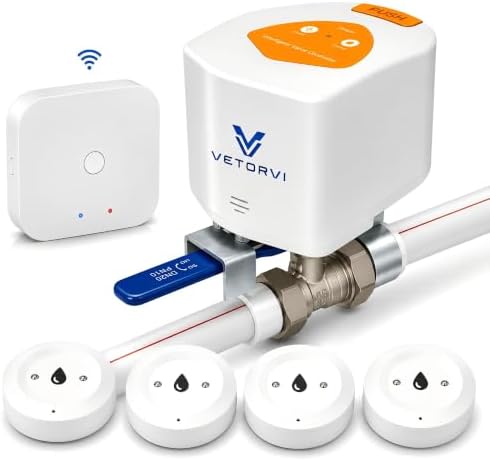
Unlike the other kits here, VETORVI uses four wireless Zigbee leak sensors and a valve controller that attaches to a compatible existing ball valve. The kit also includes a Zigbee gateway. It is designed for compatible 1/2-inch and 3/4-inch ball valves, and it does not support 1-inch valves. Since it attaches to an existing valve, it does not require cutting the pipe or replacing the valve when the setup is compatible.
The product information says the leak-to-shutoff automation can run locally through the gateway after it has been configured, even if internet service is unavailable. Remote app access and notifications need an internet connection, and the gateway connects to 2.4 GHz Wi-Fi. The sensors and valve controller are battery-powered, while a compatible UPS can keep the gateway running during a household power outage; the UPS and batteries are sold separately.
This setup offers more included sensors than the wired kits and may be convenient if you want to place sensors around several appliances without routing long cables. Its main limitation is compatibility: you need to check your existing ball valve before buying. It also has more setup dependencies than a basic controller-and-sensor system, including the gateway and app configuration.
Pros:
- Includes four wireless leak sensors and a Zigbee gateway.
- Attaches to compatible 1/2-inch and 3/4-inch existing ball valves without pipe cutting.
- Local automatic shutoff can work without internet after setup.
- Supports app access and notifications when connected to the internet.
Cons:
- Does not fit 1-inch valves, and compatibility must be checked before purchase.
- Batteries and a UPS are sold separately; remote access requires internet.
Verdict: Choose the VETORVI if you want four wireless sensors and already have a compatible 1/2-inch or 3/4-inch ball valve.
How to Choose a Water Leak Detector with a Shutoff Valve
Check the valve and pipe connection
Start by identifying the size and type of your water line and shutoff valve. Some systems include a valve that connects to the plumbing, while others attach an actuator to an existing ball valve. Compare the product’s connection details with your setup before buying. When the listing uses terms such as NPT or DN, do not assume they match your pipe without checking the actual measurements and fittings.
Decide how many areas need coverage
Think about where a leak could cause damage, such as near a washing machine, water heater, sink, or toilet. Count the spots you want to monitor and compare that number with the included sensors. A kit that supports extra sensors may be useful if you want to expand later, but confirm that additional sensors are compatible and available.
Choose wired or wireless sensors
Wired sensors can be a good fit when the controller is close enough for the included cable to reach the leak-prone area. Check the cable length and plan where the controller will sit. Wireless sensors avoid long sensor cables and can be easier to place around a room, but systems with gateways may need extra setup and have different power requirements.
Understand power and outage behavior
Check how the controller, valve, sensors, and gateway receive power. Some systems offer battery backup, while others list battery-powered components or optional backup equipment. Do not assume the entire system will keep working during an outage just because one part has batteries. Confirm which components need backup and whether batteries or a UPS are included.
Look at alert and control features
An audible alarm can help alert someone nearby, while visual indicators may help you identify which sensor has triggered. App notifications can be helpful when you are away, but they may depend on an internet connection. If remote alerts are important, check the system’s network requirements and what functions continue locally if internet service is interrupted.
Plan for installation and maintenance
Sensor placement is important: put each sensor where water from a leak is likely to reach it. Installing a valve on a water line can require plumbing work, even when a product is described as easy to install. If you are unsure about the fittings or valve installation, consult a qualified plumber. Also check how to test the system, reset it after an alert, and reopen the water supply safely.
Frequently Asked Questions
How does a water leak detector with a shutoff valve work?
A sensor detects water and sends a signal to a controller. The controller then triggers an alarm and closes a connected valve to stop or reduce the water flow. The exact response and alert features vary by system, so check the product details.
Where should I place the leak sensors?
Place sensors near plumbing or appliances where a leak could occur, such as under sinks or near a washing machine or water heater. The sensor must be positioned where water can reach it. Follow the placement instructions for your specific model.
Do these systems need Wi-Fi?
Not all of them. The wired kits in this guide are described as detector-and-controller systems without listed app features. VETORVI uses a gateway and Wi-Fi for remote app access and notifications, while its configured local shutoff automation is described as working without internet.
Can I install a shutoff system myself?
Some products are designed with DIY installation in mind, but a valve that connects to a water line still needs to fit your plumbing correctly. If you are not comfortable working with pipe fittings or are unsure about compatibility, ask a qualified plumber to install it.
Will the system work during a power outage?
That depends on the system and which components have backup power. The E-SDS controller accepts four AA batteries as backup, but they are not included. VETORVI says its gateway can be kept running with a compatible UPS, which is sold separately. Check the details for any model you are considering.
How many sensors should I buy?
Choose enough sensors to cover the areas you want monitored. Two sensors may cover a couple of key locations, while a larger home or several leak-prone appliances may call for additional sensors. Check the maximum sensor capacity and compatibility before planning an expanded setup.
Final Recommendation
For a simple wired setup, the E-SDS combines a 3/4-inch NPT brass valve with an audible and visual alarm and optional battery backup. If you want a whole-house system with expandable sensors and listed support terms, consider the iSpring LS43. The VETORVI is the better fit for wireless coverage when your existing ball valve is compatible and you want local shutoff automation. Whichever you choose, verify the valve fit, sensor coverage, and power requirements before installation.