

Choosing the best portable generator starts with knowing what you need to power. A large dual-fuel model can run more home essentials during an outage, while a compact inverter generator is easier to take camping and quieter around a campsite. The picks below range from a 2,200-watt Honda to high-output backup options, so compare their fuel types, outlets, portability, and starting features before you decide.
Quick Comparison
| Generator | Power and fuel | Standout features | Best for |
|---|---|---|---|
| Westinghouse 12500-Watt Dual Fuel Generator | 9,500 running watts on gas; 8,500 on propane | Remote, electric, and recoil start; up to 12 hours of stated runtime | Home backup with flexible starting options |
| Westinghouse 14500-Peak-Watt Tri-Fuel Generator | 11,500 running watts on gas; gas, propane, or natural gas | Remote and push-button start; less than 5% THD | Home backup with three fuel choices |
| DuroMax XP13000EH Dual Fuel Generator | 13,000 watts; gasoline or propane | Electric start, 50-amp outlet, all-metal frame | High-output backup and jobsite use |
| Westinghouse 14500-Peak-Watt Dual Fuel Generator | 11,500 running watts on gas; gasoline or propane | Remote and push-button start; less than 5% THD | Home backup without a natural-gas option |
| Honda EU2200i Inverter Generator | 2,200 watts; gasoline | Inverter power, app and Bluetooth features, CO detection | Camping and lighter portable power needs |
Our Picks: Best portable generators reviews
Westinghouse 12500-Watt Dual Fuel Generator: Best for Flexible Home Backup
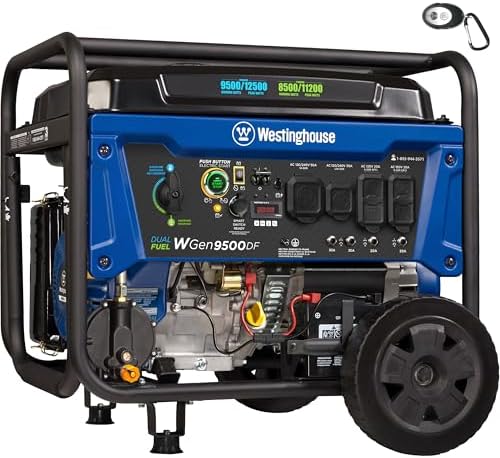
This Westinghouse is a large dual-fuel generator designed for backup power at home. It delivers 9,500 running watts on gasoline or 8,500 on propane, with higher peak output for brief startup demands. The choice of fuel can be useful during an outage, when one type may be easier to get or store than the other.
Starting options are a notable convenience: use the included remote key fob, electric start, or recoil start. The 6.6-gallon tank is rated for up to 12 hours of runtime, though actual runtime depends on the load. A digital display reports voltage, frequency, and lifetime hours, while the outlet mix includes a 30-amp transfer-switch-ready connection and a 50-amp RV-ready outlet.
Its 457cc engine and cast-iron sleeve are built for substantial backup use, but this is not a lightweight camping generator. You will need space to store it and a safe outdoor location to operate it. Plan your home connection in advance: a transfer switch or other suitable setup is a separate consideration, and a qualified electrician can help you choose the right option.
Pros:
- Runs on gasoline or propane.
- Remote, electric, and recoil starting options.
- Useful mix of household, transfer-switch-ready, and RV outlets.
- Includes a battery charger, oil, funnel, and tool kit.
Cons:
- Large size and weight make it less suited to frequent transport.
- Its stated runtime is based on conditions that may differ from your actual load.
Verdict: Choose this Westinghouse if you want substantial home backup, two fuel options, and remote starting in one package.
Westinghouse 14500-Peak-Watt Tri-Fuel Generator: Best for Three Fuel Options

This high-output Westinghouse offers gasoline, propane, and natural gas operation. On gasoline, its listed output is 11,500 running watts and 14,500 peak watts. Having three fuel choices can give you more flexibility for home backup, but you should confirm the right connections and fuel supply for your setup before relying on it.
The 550cc engine uses pressure lubrication and a reusable oil screen, features intended to support engine care over time. The generator offers remote and push-button starting, a 9.5-gallon gas tank, and a stated runtime of up to 19 hours at 25% load on gasoline. Its listed total harmonic distortion is less than 5%, which the manufacturer describes as cleaner power for electronics.
It also includes a carbon monoxide sensor and automatic low-oil shutdown. Its 30-amp and 50-amp outlets can work with compatible home backup equipment, but the transfer switch and related installation are sold separately. The supplied product data marks this listing unavailable, so check its status before making it part of an emergency-power plan.
Pros:
- Accepts gasoline, propane, or natural gas.
- High stated gasoline output for home backup.
- Remote and push-button starting.
- Low-THD output and built-in CO detection.
Cons:
- Transfer switch equipment is sold separately.
- The supplied product data marks the listing unavailable.
Verdict: This is a strong match if three fuel choices and high output are priorities, provided the listing is available and your planned fuel and transfer setup are compatible.
DuroMax XP13000EH: Best for Heavy-Duty Dual-Fuel Power

The XP13000EH is a dual-fuel generator built for large power needs at home, on an RV trip, or at a jobsite. Its 13,000-watt designation and gasoline-or-propane operation make it a high-output choice, though the supplied product details do not state its running-watt rating. Check the full specifications and compare them with the starting and running needs of the equipment you plan to use.
The front-facing control panel lets you switch fuel types, and electric starting makes operation simpler than relying only on a recoil pull. A 50-amp outlet is described as transfer-switch ready. The manufacturer also highlights an all-metal frame and panel, copper windings, and no-flat tires, details that suit a unit intended to be moved and used in demanding settings.
This generator is much larger than the Honda inverter option and is not the pick for quiet camping or easy one-person lifting. Its heavy-duty build and high advertised output are better suited to users who can store it securely and have a clear plan for safe operation and home connection. As with any generator, use it outdoors, away from doors and windows, and follow the manual.
Pros:
- Runs on gasoline or propane.
- Electric start and a front-facing fuel selector.
- 50-amp transfer-switch-ready outlet.
- Metal construction, copper windings, and no-flat tires.
Cons:
- Large, heavy-duty format is less convenient for camping or frequent transport.
- Running-watt output is not specified in the supplied product details.
Verdict: Consider the DuroMax if you want a rugged, high-output dual-fuel unit and can confirm its running capacity suits your equipment.
Westinghouse 14500-Peak-Watt Dual Fuel Generator: Best for High Output on Gas or Propane

This model shares much of the tri-fuel Westinghouse’s backup-focused design, but it runs on gasoline or propane rather than natural gas. It is listed at 11,500 running watts and 14,500 peak watts on gasoline. If those two fuel options match what you can store and access, it may be a more straightforward choice than paying attention to a third fuel setup.
The 550cc engine has a pressure-lubrication system and reusable oil screen. It offers remote and push-button starting, a 9.5-gallon gasoline tank, and up to 19 hours of stated runtime at 25% load on gasoline. The manufacturer lists less than 5% THD, along with a CO sensor and low-oil shutdown.
Its 30-amp and 50-amp outlets are intended to pair with compatible backup equipment, but an interlock kit, manual transfer switch, or automatic transfer switch is a separate purchase. This is a large home-backup machine, not a compact choice for casual outings. The supplied product data marks this listing unavailable, so verify its status before planning around it.
Pros:
- High stated running output on gasoline.
- Gasoline and propane fuel flexibility.
- Remote and push-button start.
- CO detection and automatic low-oil shutdown.
Cons:
- Home transfer equipment is sold separately.
- The supplied product data marks the listing unavailable.
Verdict: Pick this model over the tri-fuel version if you do not need natural-gas operation, but confirm availability and plan for the separate home-connection equipment.
Honda EU2200i: Best Compact Inverter Generator for Camping

The Honda EU2200i takes a different approach from the large home-backup models: it is a compact gasoline inverter generator for camping, RV use, and lighter power needs. Its inverter technology is described as providing power suitable for computers. At just over 47 pounds, it is much easier to move than the full-size options in this guide.
Honda lists a noise range of 48 to 57 dB(A) and a runtime of 3.2 to 8.1 hours on its 0.95-gallon tank. Actual noise and runtime vary with use. The Eco Throttle system is designed to support fuel efficiency, and the My Generator app connects by Bluetooth for operation and monitoring. CO-MINDER monitors carbon monoxide and can shut the unit down when levels approach a dangerous range.
The trade-off is capacity. At 2,200 watts, it is not a substitute for a high-output generator meant to run many household loads during an outage. It is also gasoline-only, so it lacks the fuel flexibility of the larger Westinghouse and DuroMax picks. The supplied details state that this model is not available in California.
Pros:
- Compact and relatively light at just over 47 pounds.
- Inverter output for electronics such as computers.
- Quieter operation than the large backup models, based on its stated range.
- Bluetooth app features and CO-MINDER detection.
Cons:
- Lower output is not suited to powering a whole home.
- Runs on gasoline only and has a relatively small fuel tank.
Verdict: Choose the Honda for portable power at camp or on an RV trip, not as your main solution for running multiple household essentials during an outage.
How to Choose the Best Portable Generator
Match running watts to the equipment you need
Make a list of the appliances and tools you want to run, then check each item’s running watts and startup needs. Motors in appliances can draw more power when they start than while they keep running. Compare your total needs with a generator’s running-watt rating, not just its peak-watt number. The DuroMax details supplied here list 13,000 watts but do not specify running watts, so check the full product specifications before choosing it for a particular load.
Choose the fuel type that fits your plans
Gasoline is common, while propane can offer another option for a dual-fuel generator. A tri-fuel model also accepts natural gas, but using that option depends on having a suitable supply and connection. Think about what you can store safely and obtain during an outage. A generator’s fuel flexibility is only useful if you can connect and operate it correctly.
Consider runtime and the load behind it
Runtime claims depend on how much power you draw. For example, one Westinghouse model lists up to 19 hours at 25% load on gasoline; that figure should not be treated as a promise at heavier loads. Tank size, fuel type, and the appliances you run all affect how often you need to refuel. Compare runtime figures only when the stated load and fuel conditions are clear.
Think about portability, noise, and storage
A generator’s output often comes with added size and weight. The Honda is just over 47 pounds and is intended for more portable uses, while the large backup models are better suited to a prepared home setup. If you plan to camp or travel, also consider noise and fuel capacity. Before buying a large unit, make sure you have a secure storage space and a safe place to operate it outdoors.
Check outlets and your home connection
Look at the outlets on the generator and compare them with the devices you want to power. A transfer-switch-ready outlet does not mean a transfer switch is included. Home backup equipment may be sold separately, and the correct connection depends on your electrical setup. Ask a qualified electrician about the safest way to connect a generator to your home.
Prioritize safety features and safe operation
Carbon monoxide is a serious hazard. A CO sensor can add protection, but it does not make indoor or enclosed operation safe. Operate a portable generator outdoors and away from doors, windows, and vents, following the manufacturer’s instructions. Also review features such as low-oil shutdown and covered outlets, and keep up with maintenance as described in the manual.
Decide whether inverter power matters
Inverter models are often appealing for camping and electronics. The Honda’s supplied details specifically describe its inverter output as suitable for computers. Large conventional backup models focus more on high output and home connections. Choose based on the loads you need to run rather than assuming that one generator type is best for every use.
Frequently Asked Questions
What size portable generator do I need for home backup?
It depends on which appliances you want to run at the same time and their startup needs. Add the running watts for your planned loads and account for equipment that draws extra power when starting. If you want to connect a generator to home circuits, consult an electrician about a suitable transfer setup.
Is a dual-fuel generator better than a gas-only model?
It can be more flexible if both gasoline and propane are practical for you. The added fuel choice does not automatically mean longer runtime or more output, so compare the ratings for each fuel and consider your storage and supply needs.
Can I use a portable generator to power my home?
Some portable generators have outlets designed to work with compatible transfer equipment, but they should not be connected to household wiring with an improvised setup. Have a qualified electrician help select and install the correct equipment, and follow the generator manual.
Can I run a portable generator indoors or in a garage?
No. Portable generators produce carbon monoxide and must be operated outdoors in a well-ventilated area, away from doors, windows, and vents. A CO sensor does not make indoor operation safe.
Is an inverter generator a good choice for camping?
It can be, especially when portability and lower noise are important. The Honda EU2200i is the compact inverter option in this guide, with a stated noise range of 48 to 57 dB(A). Its lower output makes it less suitable for running many household loads.
Do these generators include a transfer switch?
The supplied product details describe some models as transfer-switch ready or compatible with transfer equipment, but they do not say that a transfer switch is included. Check the listing and budget separately for any required equipment and installation.
Final Recommendation
For substantial home backup with two fuel choices and remote starting, the Westinghouse 12500-watt dual-fuel model is the most balanced pick in this group. Choose the Honda EU2200i if portability and camping use matter more than household output. The tri-fuel Westinghouse offers the widest fuel flexibility, while the DuroMax stands out for its heavy-duty design; verify product availability and specifications before making either one your backup plan.