

A whole-home battery backup keeps your lights, fridge, air conditioner and more running when the grid goes down. These systems can also store solar power and cut how much you pull from the grid at peak times. The tricky part is that they vary a lot: some are complete packages with a smart panel, and others are batteries and inverters you piece together. We compared four options by capacity, output, expandability, safety listings and how much setup they need, so you can find the one that fits your house and budget.
| Product | Capacity | Output | Best For |
|---|---|---|---|
| EcoFlow TITAN 10kWh with Smart Home Panel 10 | About 10kWh, expandable to 30kWh | 7.2kW | Complete package with smart panel |
| Anker SOLIX E10 with Power Dock | 12kWh, expandable to 90kWh | 7.6kW continuous, 10kW turbo | Full 200A panel coverage |
| ECO-WORTHY PowerMega 314Ah with 10kW Hybrid Inverter | 16.1kWh usable | 10kW inverter | DIY builds, cabins, solar storage |
| EcoFlow TITAN 5000 Plus Power Station | 5kWh, expandable to 30kWh | 7.2kW, up to 10kW with solar | Starting small and growing later |
Our Picks: Best whole home battery backup systems reviews
EcoFlow TITAN 10kWh Backup System: Best Complete Package With a Smart Panel

This is the most complete package of the four. You get the TITAN with an extra battery and the Smart Home Panel 10 in one box, so the parts that usually need to be matched up are already matched. The panel arrives pre-wired with code-compliant cables and needs no changes to your main panel, which should make the install cleaner for your electrician.
The 7.2kW output with 120V/240V split-phase power can run a 3-ton central air conditioner alongside your fridge and lights without a soft starter. The panel backs up 10 circuits plus five split-phase loads, such as a dryer, range, well pump or EV charger. Storage starts at roughly 10kWh and can grow to 30kWh with extra batteries, and you can recharge from the grid, solar or a generator. The trade-off is that it backs up chosen circuits, not every circuit in the house.
Pros:
- Panel ships pre-wired and needs no main-panel changes
- Runs a 3-ton central AC without a soft starter
- Backs up 10 circuits plus five split-phase loads
- Expands from about 10kWh up to 30kWh
Cons:
- Backs up selected circuits, not every circuit in the house
Verdict: Choose the EcoFlow TITAN 10kWh system if you want the easiest path to real whole-home backup with the panel included.
Anker SOLIX E10 Power Dock Kit: Best for Covering a Full 200A Panel

The big difference here is the Power Dock, which covers a full 200A panel. Many home batteries only handle 100A, so this one suits larger homes where you want every circuit to keep working. It switches over automatically in 20 milliseconds or less, so most things stay on when the grid drops.
The kit has two B6000 battery modules for 12kWh, and you can scale up to 90kWh. Output is 7.6kW continuous with a 10kW turbo mode, and units can be combined for more. It is built for outdoor use without a shelter, with a NEMA 4 rating on the battery and 3R on the dock, and it works from -4°F to 131°F. The warranty runs 5 years on the E10 and 10 years on the Dock. Note that the pieces ship separately, so don’t panic if one box arrives first.
Pros:
- Power Dock covers a full 200A panel
- Switches over in 20 milliseconds or less
- Weatherproof for outdoor use, with a 10-year Dock warranty
- Scales up to 90kWh
Cons:
- Ships in separate packages
- Wiring into a home panel is a job for a licensed electrician
Verdict: Pick the Anker SOLIX E10 if you have a 200A home and want the widest coverage with an automatic switchover.
ECO-WORTHY PowerMega 314Ah and 10kW Hybrid Inverter: Best DIY Pick With Big Storage

Choose this one if you like to build your own system and want a lot of storage in a single battery. It pairs a 10kW hybrid inverter with a UL 1973-certified 48V battery that gives 16.1kWh of usable energy, which is the biggest single battery in this lineup.
The inverter supports 240V split-phase and 120V output, and the battery talks to many inverters through RS485, CAN and RS232. A built-in screen, WiFi and Bluetooth let you watch the battery from your phone. Safety extras include active balancing, a built-in breaker and an aerosol fire suppression module. It is also fine for a cabin or an off-grid setup. The catch is that it ships by truck freight on a pallet, it has reinforced casters but is still heavy, and nothing here wires it into your home panel for you. Plan on hiring a licensed electrician, and know that this single-battery listing leaves out parallel cables.
Pros:
- 16.1kWh of usable energy in a single battery
- Many communication ports for inverter compatibility
- Built-in breaker and fire suppression module
- 10-year warranty
Cons:
- Heavy freight delivery on a pallet
- Needs a pro to connect it to your home panel
Verdict: Go with the PowerMega if you want the most usable energy from a single battery and you are comfortable with a DIY build.
EcoFlow TITAN 5000 Plus: Best Entry Point for Growing Your System Later
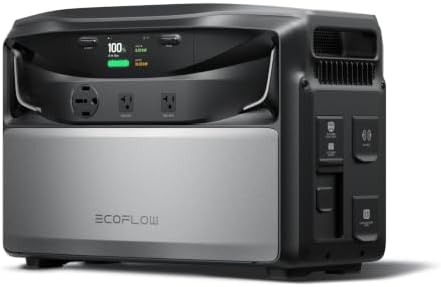
Think of this as the starting point of EcoFlow’s system. It is a single 5kWh unit with 7.2kW continuous output, which can reach 10kW when solar PV is connected. That is enough for a central air conditioner and a fridge at the same time without a soft starter.
It uses the same expansion path as the top pick, up to five 5kWh batteries for 30kWh. It can recharge from the grid at up to 7.6kW, from 8kW of solar input, or from a generator through the Smart Home Panel 10. It is UL 9540 certified and tested to UL 9540A, with EV-grade lithium iron phosphate cells. The box holds only the unit and charging cables, so you still need to add the panel for whole-home hookup. If you want to start smaller and expand later, this is the sensible entry.
Pros:
- Lower starting point with the same expansion path
- 7.2kW output, up to 10kW with solar
- UL 9540 certified with EV-grade LFP cells
- Expands up to 30kWh
Cons:
- Needs the Smart Home Panel for whole-home hookup
- Single 5kWh battery gives limited runtime alone
Verdict: Start with the TITAN 5000 Plus if your budget is tight now and you plan to add batteries and a panel later.
How to Choose a Whole Home Battery Backup System
Capacity (kWh) and runtime
Capacity tells you how much energy the battery stores, and it sets how long you stay powered. A fridge and some lights sip power, but a central air conditioner, dryer or well pump drains a battery fast. List what you must keep running, then pick a system with room to grow. Most of the picks here can add batteries later, which is a smart way to start small.
Continuous output and surge power
Output, measured in kilowatts, decides how many things can run at the same time. A 7.2kW or 7.6kW system can handle a central AC plus your essentials, while higher turbo ratings help with short startup surges. Check whether a system needs a soft starter for big motors, since some of these do not.
Panel coverage and installation
Whole-home backup needs a way to connect the battery to your house. A smart panel or power dock handles the switchover and decides which circuits stay live. A 200A dock covers an entire panel, while a smaller panel protects chosen circuits. A battery sold without an inverter or panel needs both, plus a licensed electrician, so count that cost and effort before you buy.
Battery chemistry and safety listings
Lithium iron phosphate, often called LFP, is a popular choice for home storage because of its long cycle life and stable chemistry. Look for UL 1973, UL 9540 and UL 9540A listings, since local codes, permits and insurers often ask about them. Built-in fire suppression and battery management add another layer.
Charging options
The best systems charge from more than one source. Solar, the grid and a generator all keep you going through a long outage. Check the maximum solar input, and see whether smart software can charge at off-peak hours to help lower your bill.
Weather rating, warranty and delivery
If the battery will sit outside or in a garage, check its weather rating and temperature range. Warranties of 10 years are common on good systems. Heavy batteries often ship by freight or in several boxes, so plan where they will land and who will move them.
Frequently Asked Questions
Can a battery backup run my whole house?
Often yes, if the system is sized for it. A 200A power dock can cover an entire panel, while smart panels back up selected circuits. Look at your biggest loads, like central air, and match them to the output rating.
How many kWh do I need?
It depends on what you run and how long the outage lasts. Essentials like a fridge and lights need much less than central air and an electric range. Systems that expand to 30kWh or more give you room to adjust later.
Do I need an electrician to install one?
Yes. Connecting a battery system to your home’s wiring should be done by a licensed electrician, following local code and any required permits. Never power your house by plugging a generator or battery into a wall outlet, because that can backfeed the grid and endanger utility workers. Kits with pre-wired panels can make the job faster and cleaner.
Can I charge these with solar panels?
Most of these systems accept solar input. Some take up to 8kW of solar, and the hybrid inverter pick lists high MPPT efficiency. Always check that your solar array matches the input limits.
What does UL 9540 mean?
It is a safety standard for energy storage systems, and UL 9540A relates to how a battery handles thermal runaway. These listings can help with permits and insurance, so they are worth looking for.
Is a bigger battery always better?
No. A larger battery costs more and takes more space. It is better to match capacity to your needs and pick a system you can expand, so you only buy what you will use.
Our Final Recommendation
For most homeowners, the EcoFlow TITAN 10kWh system is the easiest way to get real whole-home backup, since the smart panel comes in the box. If your home has a 200A service and you want every circuit covered, the Anker SOLIX E10 kit is the stronger fit. DIY builders who want lots of usable energy should look at the ECO-WORTHY PowerMega, and anyone planning to start small can begin with the EcoFlow TITAN 5000 Plus. Whatever you choose, size it to your biggest loads and hire a qualified installer.